

What is Fulfilment Operations?
Fulfilment operations refers to the end-to-end process of receiving, managing, picking, packing, dispatching, and tracking customer orders.
For growing businesses, fulfilment operations is not just a warehouse activity. It connects inventory, order management, warehouse workflows, carriers, customer service, and business performance.
This guide explains what fulfilment operations means, why it matters, and how businesses can improve it as order volumes grow.
What Does Fulfilment Operations Mean?
Fulfilment operations is the set of processes used to move an order from the point of sale to successful delivery.
It usually includes:
- Receiving stock into the warehouse
- Storing products in the right locations
- Managing inventory availability
- Processing customer orders
- Picking and packing items
- Booking shipments with carriers
- Sending dispatch updates
- Handling returns and exceptions
In simple terms, fulfilment operations is how a business turns an order into a delivered customer experience.
Why Fulfilment Operations Matters
Fulfilment has a direct impact on customer satisfaction, operational cost, stock accuracy, and profitability.
When fulfilment operations work well, businesses can dispatch orders faster, reduce mistakes, improve stock visibility, and scale without adding unnecessary manual effort.
When fulfilment operations are weak, common problems include:
- Picking errors
- Late dispatches
- Stock discrepancies
- Overselling
- Customer complaints
- High fulfilment cost per order
- Warehouse bottlenecks during peak periods
The Main Parts of Fulfilment Operations
1. Inventory Management
Inventory management ensures the business knows what stock is available, where it is located, and whether it can be sold or allocated to orders.
Poor inventory accuracy often leads to overselling, delayed orders, and unnecessary customer service issues.
2. Order Management
Order management controls how orders are received, prioritised, allocated, and passed into fulfilment.
As businesses grow across ecommerce, wholesale, marketplaces, and B2B channels, order management becomes increasingly important.
3. Warehouse Operations
Warehouse operations cover the physical movement of goods, including receiving, putaway, picking, packing, stock movement, and dispatch.
This is where fulfilment accuracy and speed are often won or lost.
4. Carrier and Shipping Management
Carrier management connects packed orders with delivery services. This may include label generation, tracking updates, service selection, and dispatch confirmation.
5. Returns Management
Returns are part of fulfilment operations too. A strong returns process helps businesses inspect returned goods, update stock, issue refunds, and identify recurring product or fulfilment problems.
Fulfilment Operations vs Warehouse Operations
Warehouse operations are one part of fulfilment operations, but they are not the same thing.
| Area | Warehouse Operations | Fulfilment Operations |
|---|---|---|
| Main focus | Physical warehouse activity | End-to-end order fulfilment |
| Includes | Picking, packing, stock movement | Orders, inventory, warehouse, carriers, returns |
| Primary goal | Move stock accurately | Deliver orders efficiently |
| Business impact | Warehouse productivity | Customer experience, cost, scalability |
A business can have a warehouse process, but still lack a joined-up fulfilment operation.
Signs Your Fulfilment Operations Need Improvement
Many businesses only review fulfilment operations once problems become visible. Common warning signs include:
- Orders regularly miss dispatch deadlines
- Warehouse staff rely heavily on paper or spreadsheets
- Stock figures are not trusted
- Customer service teams cannot see order status clearly
- Picking errors are increasing
- Returns take too long to process
- Peak trading periods cause operational chaos
- The business needs more staff just to keep up
How Businesses Improve Fulfilment Operations
Improving fulfilment operations usually requires better process design, clearer operational rules, and the right technology support.
Common improvement areas include:
- Warehouse layout optimisation to reduce walking time and improve picking flow
- Barcode scanning to reduce errors and improve stock accuracy
- Order prioritisation rules to manage service levels and dispatch deadlines
- Real-time inventory visibility to reduce overselling and stock discrepancies
- Carrier integration to streamline shipping and tracking
- Operational dashboards to monitor fulfilment performance
What Software Supports Fulfilment Operations?
Different systems support different parts of fulfilment operations.
| System | Role in Fulfilment Operations |
|---|---|
| ERP | Financials, stock records, purchasing, sales orders |
| OMS | Order capture, order routing, allocation, fulfilment status |
| WMS | Warehouse execution, picking, packing, stock movement |
| Carrier System | Shipping labels, carrier services, tracking updates |
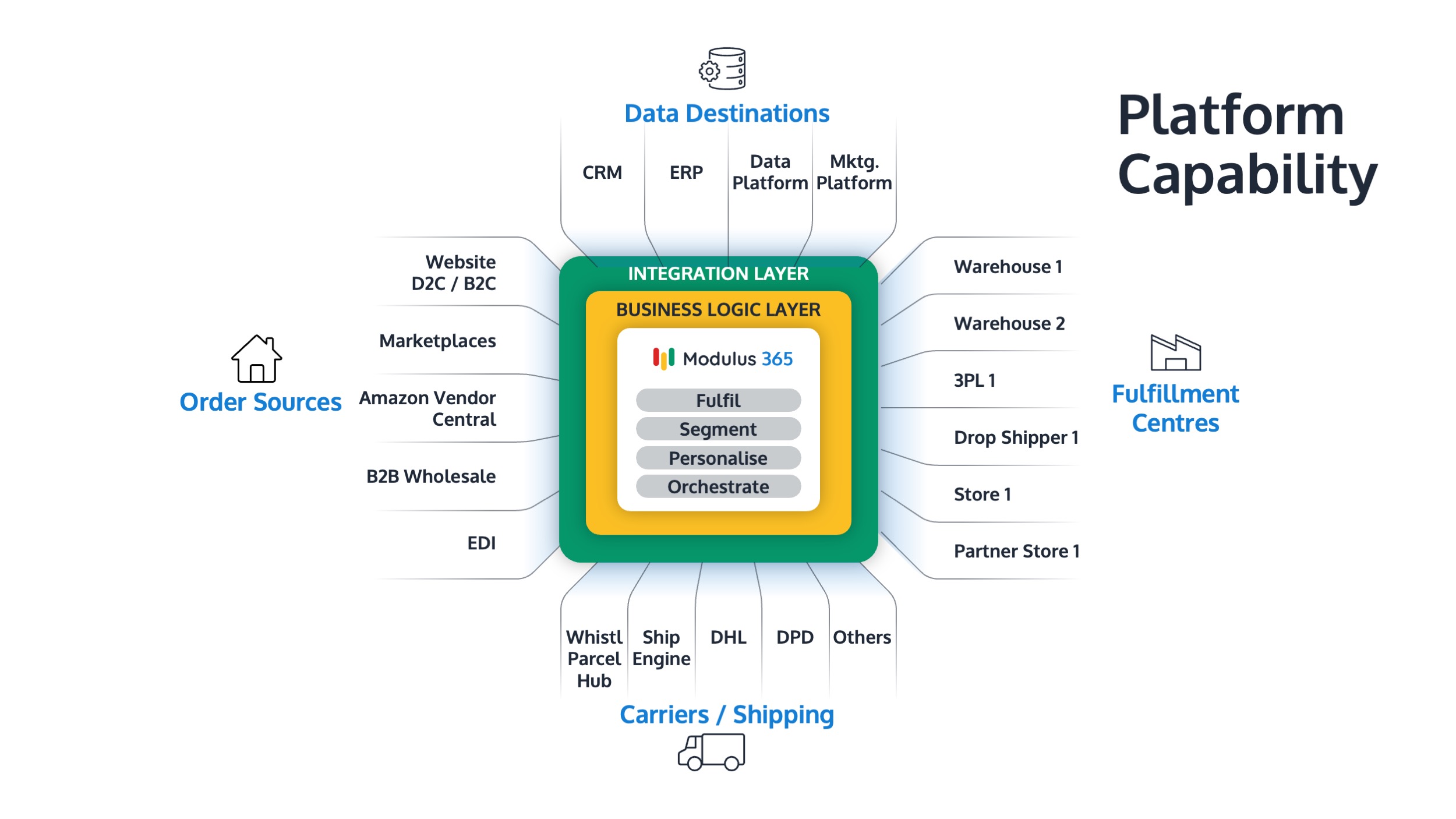
| Fulfilment Platform | Connects order management, warehouse execution, inventory visibility, shipping, and reporting |
For many growing businesses, the challenge is not one system in isolation. The bigger challenge is connecting these systems into one controlled fulfilment flow.
Where Modulus365 Fits
Modulus365 is a fulfilment operations platform that helps businesses connect order management, warehouse workflows, inventory visibility, carrier integrations, and operational reporting.
For businesses using Sage, Modulus365 can work alongside the ERP as the fulfilment layer, helping operations teams scale without relying on manual processes or disconnected systems.
👉 Learn more about Modulus365 for Sage.
Related FOA Guides
Fulfilment operations connects order management, warehouse execution, inventory accuracy, fulfilment KPIs, and returns into one operational flow. These related guides will help you go deeper:
- OMS vs WMS: What’s the Difference?
- What is Order Orchestration?
- How to Improve Warehouse Picking Accuracy
- Fulfilment KPIs Every Operations Leader Should Track
- How to Reduce Fulfilment Cost Per Order
- Inventory Accuracy: Why It Breaks and How to Fix It
- Cycle Counting vs Annual Stock Takes
- How to Manage Peak Season Fulfilment
- Returns Management Best Practices
Ready to Improve Fulfilment Operations?
If your fulfilment processes are becoming harder to manage, Modulus365 can help bring order management, warehouse execution, stock visibility, and dispatch workflows into one connected platform.
Frequently Asked Questions
What is fulfilment operations?
Fulfilment operations is the end-to-end process of managing customer orders from receipt through picking, packing, dispatch, delivery updates, and returns.
Why is fulfilment operations important?
Fulfilment operations affects customer experience, warehouse productivity, stock accuracy, dispatch speed, and operational cost.
What is the difference between fulfilment and warehouse operations?
Warehouse operations focus on physical warehouse activity, while fulfilment operations covers the full journey from order receipt to delivery and returns.
How can businesses improve fulfilment operations?
Businesses can improve fulfilment operations by improving stock accuracy, automating picking and packing, integrating carriers, using order rules, and tracking operational KPIs.
What software is used for fulfilment operations?
Businesses commonly use ERP, OMS, WMS, carrier systems, and fulfilment platforms to manage fulfilment operations.