

How to Reduce Fulfilment Cost Per Order
Fulfilment cost per order is one of the most important measures of operational efficiency. It shows how much it costs your business to process, pick, pack, dispatch, and support each customer order.
As order volumes grow, fulfilment costs can quietly increase through labour inefficiency, picking errors, poor stock accuracy, excess packaging, carrier charges, returns, and manual admin.
This guide explains how to reduce fulfilment cost per order without damaging accuracy, service levels, or customer experience.
What is Fulfilment Cost Per Order?
Fulfilment cost per order is the average operational cost of fulfilling one customer order.
Formula:
Fulfilment Cost Per Order = Total Fulfilment Costs ÷ Total Orders Fulfilled
For example, if your total monthly fulfilment costs are £40,000 and you fulfil 10,000 orders, your fulfilment cost per order is £4.00.
This metric helps operations leaders understand whether fulfilment is becoming more efficient as order volume grows.
Related guide: Fulfilment KPIs Every Operations Leader Should Track
What Should Be Included in Fulfilment Cost Per Order?
Fulfilment cost per order should include the direct and indirect costs required to process and dispatch orders.
- Warehouse labour
- Picking and packing time
- Packaging materials
- Carrier and shipping costs
- Warehouse overheads
- Software and system costs
- Returns handling
- Rework caused by errors
- Customer service activity linked to fulfilment issues
The more accurately you measure these costs, the easier it becomes to identify where savings can be made.
Why Fulfilment Cost Per Order Increases
Fulfilment costs usually rise when warehouse activity becomes more complex but processes remain manual.
Common causes include:
- Too much walking time in the warehouse
- Inefficient picking methods
- Poor stock location accuracy
- Manual order entry or rekeying
- Incorrect picks and dispatch errors
- Excessive packaging
- Poor carrier selection
- High returns rates
- Unplanned overtime during busy periods
- Disconnected systems and spreadsheets
Reducing fulfilment cost per order is not about cutting corners. It is about removing waste from the operation.
1. Improve Warehouse Picking Efficiency
Picking is often one of the biggest labour costs in fulfilment.
If warehouse teams spend too much time walking, searching, checking, or correcting mistakes, cost per order rises quickly.
Ways to improve picking efficiency include:
- Using logical bin locations
- Placing fast-moving products in accessible areas
- Reducing unnecessary travel time
- Using batch, wave, zone, or trolley picking where appropriate
- Using barcode scanning to reduce errors
- Separating slow-moving and fast-moving stock
Improving picking accuracy also reduces rework, returns, replacements, and customer service costs.
Related guide: How to Improve Warehouse Picking Accuracy
2. Reduce Manual Admin
Manual admin is one of the hidden costs in fulfilment operations.
It often appears in areas such as:
- Manually entering orders into systems
- Creating pick lists by hand
- Updating stock manually
- Copying tracking numbers between systems
- Manually selecting carriers
- Reconciling stock discrepancies
- Handling avoidable customer service queries
These tasks may look small individually, but they become expensive at scale.
Automation helps reduce repetitive admin and allows teams to focus on higher-value operational work.
3. Improve Inventory Accuracy
Poor inventory accuracy increases fulfilment cost because teams waste time searching for stock, fixing discrepancies, managing failed picks, and handling customer issues.
Inventory problems can cause:
- Overselling
- Cancelled orders
- Failed picks
- Urgent stock checks
- Unplanned substitutions
- Extra customer service workload
- Delayed dispatch
Good inventory accuracy depends on strong receiving, putaway, stock movement, picking, returns, and cycle counting processes.
For Sage 200 users, read: Inventory Management for Sage 200
4. Optimise Packaging
Packaging can have a significant impact on fulfilment cost per order.
Common packaging cost issues include:
- Using boxes that are too large
- Overusing void fill
- Too many packaging types
- High packaging waste
- Slow packing processes
- Damaged goods due to poor packaging choice
Businesses can reduce packaging costs by standardising packaging sizes, matching packaging to product types, improving packing bench layout, and monitoring damage rates.
5. Improve Carrier Selection
Carrier cost is often one of the largest components of fulfilment cost per order.
Many businesses overspend because carrier selection is manual, inconsistent, or based on habit rather than service and cost rules.
Carrier optimisation may involve:
- Selecting the best service by weight, size, destination, and delivery promise
- Comparing carrier performance by region
- Using different carriers for different order profiles
- Monitoring failed delivery rates
- Reducing unnecessary premium services
- Improving address validation
The cheapest carrier is not always the best option. The goal is to balance cost, reliability, delivery speed, and customer expectation.
6. Reduce Split Shipments
Split shipments increase fulfilment cost because one customer order may require multiple picks, packs, labels, parcels, and carrier charges.
Common causes of split shipments include:
- Stock spread across multiple locations
- Poor stock allocation rules
- Partial stock availability
- Warehouse-specific channel rules
- Weak order orchestration
Better order orchestration helps decide whether to split, hold, reroute, or consolidate orders.
Related guide: What is Order Orchestration?
7. Reduce Picking and Packing Errors
Every fulfilment error creates extra cost.
A wrong item may lead to:
- Replacement shipment
- Return postage
- Customer service time
- Stock correction
- Refund or goodwill cost
- Damage to customer trust
Reducing errors through barcode scanning, packing checks, clearer locations, and better product data can quickly reduce operational waste.
8. Improve Labour Planning
Labour is often the biggest controllable cost in warehouse operations.
Poor labour planning leads to:
- Overtime
- Under-utilised staff
- Bottlenecks at picking or packing
- Delayed dispatch
- Peak period stress
- Temporary labour inefficiency
Operations leaders should monitor order volumes, backlog, pick rates, packing capacity, carrier cut-offs, and peak forecasts to plan labour more effectively.
9. Track Returns by Reason Code
Returns can significantly increase fulfilment cost per order, especially if the business does not understand why products are coming back.
Useful return reason codes include:
- Wrong item sent
- Damaged item
- Incorrect size
- Product not as described
- Customer changed mind
- Late delivery
- Duplicate order
Separating avoidable fulfilment-related returns from customer-choice returns helps operations teams identify where costs can be reduced.
10. Connect Systems to Reduce Rework
Disconnected systems create hidden fulfilment cost.
When ecommerce, ERP, warehouse, carrier, and customer service systems do not communicate properly, teams end up filling the gaps manually.
This creates:
- Duplicate data entry
- Delayed updates
- Manual reconciliations
- Customer service queries
- Stock mismatches
- Dispatch delays
Connected fulfilment systems help reduce rework and improve visibility across the operation.
To understand how systems fit together, read: OMS vs WMS: What’s the Difference?
Fulfilment Cost Reduction Checklist
| Area | Cost Reduction Opportunity |
|---|---|
| Picking | Reduce walking time, improve pick method, use scanning |
| Packing | Improve bench layout, standardise packaging, reduce errors |
| Inventory | Improve stock accuracy and reduce failed picks |
| Carriers | Use service rules and monitor carrier performance |
| Returns | Track reason codes and reduce avoidable returns |
| Systems | Reduce manual rekeying and disconnected workflows |
| Labour | Plan capacity around order volume and peak demand |
How Technology Helps Reduce Fulfilment Cost Per Order
Technology helps reduce fulfilment cost per order by improving visibility, reducing manual work, and making processes more consistent.
A fulfilment platform can support:
- Order orchestration
- Warehouse scanning
- Inventory visibility
- Carrier integration
- Returns workflows
- Fulfilment KPI reporting
- Operational automation
The biggest savings usually come when process improvement and technology work together.
How Modulus365 Helps Reduce Fulfilment Cost
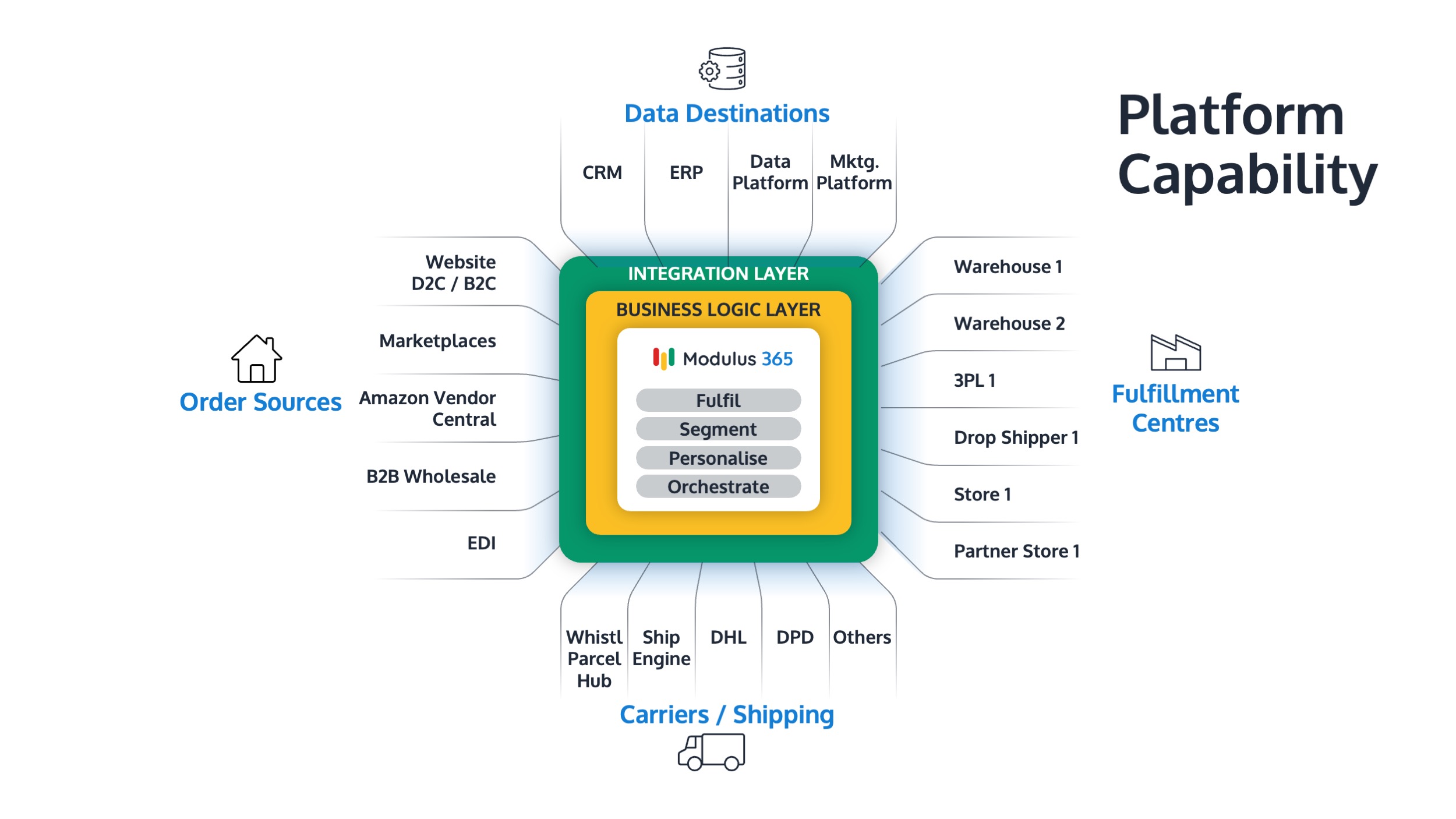
Modulus365 helps businesses connect order management, warehouse execution, inventory visibility, carrier integrations, and operational reporting.
By reducing manual work, improving fulfilment accuracy, and giving operations teams better visibility, Modulus365 can help businesses reduce avoidable fulfilment costs as they scale.
For Sage businesses, Modulus365 works alongside the ERP as a fulfilment operations platform.
👉 Learn more about Modulus365 for Sage.
Related FOA Guides
Reducing fulfilment cost per order depends on improving accuracy, reducing rework, controlling stock, and tracking the right operational KPIs. These guides are useful next reads:
- Fulfilment KPIs Every Operations Leader Should Track
- How to Improve Warehouse Picking Accuracy
- Inventory Accuracy: Why It Breaks and How to Fix It
- Cycle Counting vs Annual Stock Takes
- What is Order Orchestration?
- OMS vs WMS: What’s the Difference?
- How to Manage Peak Season Fulfilment
- Returns Management Best Practices
Ready to Reduce Fulfilment Costs?
If fulfilment costs are increasing as your business grows, Modulus365 can help bring order management, warehouse execution, stock visibility, carrier workflows, and performance reporting into one connected platform.
Frequently Asked Questions
What is fulfilment cost per order?
Fulfilment cost per order is the average cost of processing, picking, packing, dispatching, and supporting one customer order.
How do you calculate fulfilment cost per order?
Fulfilment cost per order is calculated by dividing total fulfilment costs by the total number of orders fulfilled during the same period.
How can businesses reduce fulfilment cost per order?
Businesses can reduce fulfilment cost per order by improving picking efficiency, reducing errors, optimising packaging, improving carrier selection, reducing manual admin, and increasing inventory accuracy.
Why does fulfilment cost per order increase?
Fulfilment cost per order increases when warehouse processes become inefficient, labour costs rise, stock accuracy declines, carrier costs increase, returns grow, or manual work expands.
Can automation reduce fulfilment costs?
Yes. Automation can reduce fulfilment costs by cutting manual admin, improving picking accuracy, speeding up dispatch, reducing rework, and improving operational visibility.