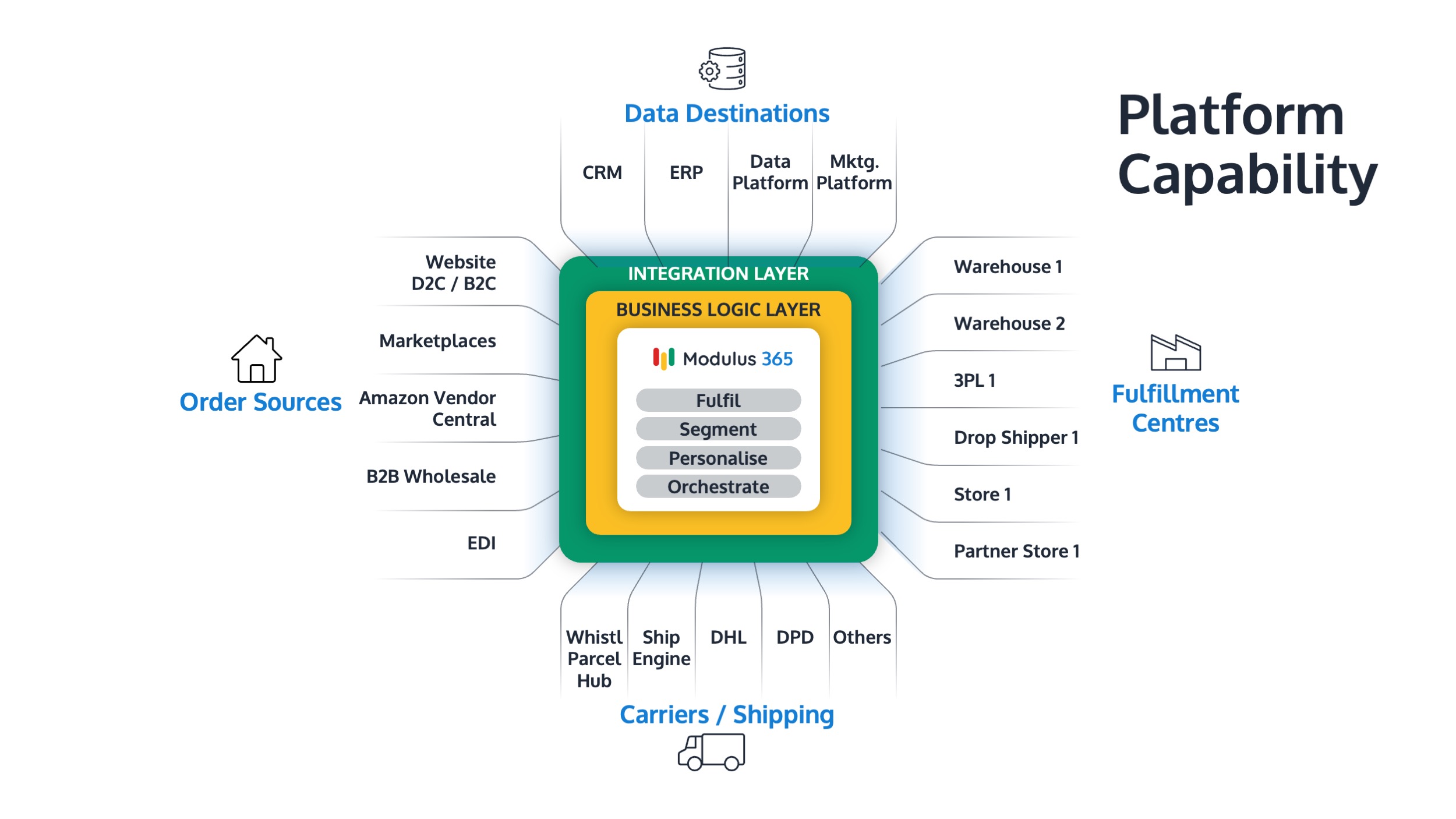


What is Order Orchestration?
Order orchestration is the process of deciding how each customer order should be fulfilled across systems, warehouses, sales channels, carriers, and fulfilment partners.
In simple terms, order orchestration answers one important question: what is the best way to fulfil this order?
This guide explains what order orchestration means, why it matters, and how it fits into modern fulfilment operations.
What Does Order Orchestration Mean?
Order orchestration is the coordination of orders from the moment they are received through to allocation, routing, fulfilment, dispatch, and status updates.
It helps businesses decide:
- Which warehouse should fulfil the order
- Which stock should be allocated
- Whether the order should be split
- Which carrier or delivery service should be used
- How priority orders should be handled
- How customers and teams should be updated
Order orchestration sits between order capture and physical fulfilment. It connects the commercial order with the operational process required to deliver it.
If you are new to this topic, you may want to start with our guide: What is Fulfilment Operations?
Why Order Orchestration Matters
As businesses grow, orders often come from multiple places: ecommerce websites, marketplaces, wholesale customers, retail stores, B2B portals, EDI channels, and customer service teams.
Without orchestration, teams may rely on manual decisions, spreadsheets, or disconnected systems to decide how orders should be fulfilled.
This can create problems such as:
- Orders being sent to the wrong warehouse
- Stock being allocated incorrectly
- Unnecessary split shipments
- Delayed dispatch
- Higher fulfilment costs
- Poor customer service visibility
- Manual order handling and rekeying
Order orchestration helps reduce these issues by applying clear fulfilment rules and improving control across the order journey.
Order Orchestration vs Order Management
Order management is the broader process of capturing, processing, tracking, and managing orders. Order orchestration is the decision-making layer within that process.
| Area | Order Management | Order Orchestration |
|---|---|---|
| Main role | Manage the order lifecycle | Decide how orders should be fulfilled |
| Focus | Order capture, status, updates, customer visibility | Routing, allocation, prioritisation, fulfilment rules |
| Typical question | What is happening with this order? | Where should this order be fulfilled from? |
| Business value | Control and visibility | Efficiency, speed, and fulfilment optimisation |
To understand where order orchestration fits alongside OMS and WMS, read our guide: OMS vs WMS: What’s the Difference?
How Order Orchestration Works
A typical order orchestration flow may look like this:
Order received → stock checked → fulfilment location selected → order allocated → warehouse instructed → carrier selected → dispatch confirmed → customer updated
Each step may involve rules, data, and system integrations.
Example 1: Single Warehouse Fulfilment
If the business has one warehouse, orchestration may be relatively simple. The system checks stock availability, allocates stock, passes the order to the warehouse, and updates the order once dispatched.
Example 2: Multi-Warehouse Fulfilment
If the business has multiple warehouses, orchestration becomes more important. The system may need to decide which warehouse should fulfil the order based on stock availability, customer location, delivery promise, workload, or cost.
Example 3: Split Shipment
If all items are not available in one location, the order orchestration process may decide whether to split the order across multiple shipments or hold the order until all items are available.
Common Order Orchestration Rules
Businesses can use different rules to control how orders are fulfilled.
- Stock availability rules — fulfil from the location with available stock
- Nearest warehouse rules — fulfil from the warehouse closest to the customer
- Service level rules — prioritise next-day or premium delivery orders
- Channel rules — handle marketplace, wholesale, and ecommerce orders differently
- Carrier rules — select carriers based on destination, service, weight, or cost
- Back order rules — decide whether to hold, split, or part-ship orders
- Priority rules — prioritise VIP customers, urgent orders, or SLA-critical orders
The best rules are simple enough for the operation to understand, but strong enough to remove manual decision-making.
Order Orchestration and Inventory Visibility
Order orchestration depends heavily on accurate inventory visibility.
If the system cannot trust stock availability, it cannot confidently allocate orders. Poor stock data can lead to overselling, split shipments, cancelled orders, and customer service issues.
That is why order orchestration works best when connected to real-time inventory and warehouse data.
For Sage 200 users, this links closely to inventory management. Read: Inventory Management for Sage 200
Order Orchestration and Warehouse Operations
Once an order is orchestrated, it must still be physically fulfilled. That is where warehouse operations and WMS workflows come in.
The orchestration layer may decide where the order should go, but the warehouse team still needs to pick, pack, and dispatch it accurately.
This is why order orchestration and warehouse management should work together.
For a deeper explanation of WMS capability, read: Warehouse Management System for Sage 200
Signs Your Business Needs Better Order Orchestration
- Orders are manually assigned to warehouses or teams
- Staff rely on spreadsheets to prioritise fulfilment
- Split shipments are increasing
- Customers ask for updates your team cannot easily provide
- Different sales channels follow different manual processes
- Stock allocation is inconsistent
- Peak periods create order backlogs
- Carrier selection is manual or inconsistent
If these problems are visible, the business may not just need a warehouse tool. It may need a better order orchestration layer.
Order Orchestration vs Warehouse Management
| Area | Order Orchestration | Warehouse Management |
|---|---|---|
| Main question | How should this order be fulfilled? | How should this order be picked and dispatched? |
| Focus | Allocation, routing, prioritisation, rules | Picking, packing, scanning, stock movement |
| System type | OMS or fulfilment platform | WMS or fulfilment platform |
| Impact | Improves fulfilment decisions | Improves warehouse execution |
How Modulus365 Supports Order Orchestration
Modulus365 helps businesses manage order orchestration, warehouse workflows, inventory visibility, carrier integration, and fulfilment performance in one connected platform.
For Sage businesses, Modulus365 can sit alongside the ERP as the fulfilment operations layer, helping teams route, allocate, pick, pack, dispatch, and track orders more efficiently.
👉 Learn more about Modulus365 for Sage.
Related FOA Guides
Order orchestration depends on strong fulfilment processes, reliable inventory, warehouse execution, and clear performance tracking. These guides explain the connected areas:
- What is Fulfilment Operations?
- OMS vs WMS: What’s the Difference?
- Inventory Accuracy: Why It Breaks and How to Fix It
- How to Improve Warehouse Picking Accuracy
- How to Reduce Fulfilment Cost Per Order
- How to Manage Peak Season Fulfilment
- Fulfilment KPIs Every Operations Leader Should Track
Ready to Improve Order Flow and Fulfilment Control?
If your business is managing orders across multiple channels, warehouses, carriers, or fulfilment partners, Modulus365 can help create a more controlled and scalable fulfilment process.
Frequently Asked Questions
What is order orchestration?
Order orchestration is the process of deciding how customer orders should be allocated, routed, fulfilled, dispatched, and tracked across systems, warehouses, channels, and carriers.
Why is order orchestration important?
Order orchestration improves fulfilment speed, stock allocation, warehouse efficiency, customer visibility, and operational control.
What is the difference between order management and order orchestration?
Order management controls the full order lifecycle, while order orchestration focuses on the decisions that determine how each order should be fulfilled.
Does order orchestration require a WMS?
Not always, but order orchestration works best when connected to warehouse execution, inventory visibility, and carrier systems.
Can order orchestration reduce fulfilment costs?
Yes. Better order orchestration can reduce unnecessary split shipments, manual handling, poor carrier selection, and inefficient stock allocation.