

How to Improve Dispatch Performance
Dispatch performance is one of the clearest measures of how well fulfilment operations are working. If orders are picked, packed, labelled, and handed to carriers on time, customer promises are protected. If dispatch slips, delays quickly turn into customer service pressure, backlog, refunds, and operational stress.
Improving dispatch performance is not just about asking warehouse teams to work faster. It requires better order prioritisation, stock accuracy, packing flow, carrier cut-off management, workload visibility, and exception control.
This guide explains how to improve dispatch performance and build a more reliable fulfilment operation.
What is Dispatch Performance?
Dispatch performance measures how effectively orders leave the warehouse within the expected dispatch window.
In simple terms, it answers this question: are orders being handed over to the carrier on time?
Dispatch performance is closely linked to fulfilment KPIs, because it affects on-time dispatch, customer satisfaction, carrier performance, backlog, and fulfilment cost per order.
Why Dispatch Performance Matters
Dispatch is the point where warehouse execution meets customer promise.
Even if an order is picked correctly, it can still fail operationally if it misses the carrier collection, has the wrong label, is placed in the wrong dispatch lane, or is not confirmed properly.
Poor dispatch performance can lead to:
- Late deliveries
- Missed next-day delivery promises
- Marketplace SLA failures
- Customer complaints
- Increased customer service workload
- Higher carrier costs
- Backlog growth
- Manual tracking investigations
- Reduced trust in fulfilment operations
Dispatch performance is not only a carrier issue. It is usually the result of the full fulfilment process before carrier handover.
1. Understand the Dispatch Promise
Before improving dispatch performance, define what “on time” actually means.
Dispatch promises may vary by:
- Sales channel
- Delivery service
- Customer type
- Carrier cut-off
- Warehouse location
- Order time
- Product availability
- Marketplace SLA
For example, an ecommerce next-day order placed before 2pm may need to leave the warehouse the same day, while a wholesale order may follow a different dispatch window.
The warehouse cannot protect dispatch performance unless these rules are clear.
2. Prioritise Orders by Carrier Cut-Off
Carrier cut-offs are one of the most important drivers of dispatch performance.
If orders are picked too late to be packed, labelled, staged, and handed over before collection, the dispatch promise fails.
Order prioritisation should consider:
- Carrier collection time
- Delivery promise
- Service level
- Picking time required
- Packing capacity
- Label generation time
- Dispatch lane preparation
Related guide: How to Prioritise Orders in a Busy Warehouse
3. Use Clear Carrier Selection Rules
Dispatch performance improves when carrier selection is consistent and controlled.
If staff manually choose carriers for each order, decisions can vary by person, workload, habit, or urgency.
Carrier rules should consider:
- Destination
- Parcel weight
- Parcel size
- Delivery promise
- Order value
- Sales channel
- Customer type
- Carrier reliability
- Cut-off time
- Total cost-to-serve
For more detail, read: Carrier Selection Rules for Fulfilment Teams
4. Improve Packing Bench Flow
The packing bench is often the final bottleneck before dispatch.
If picked orders are waiting too long at packing, dispatch performance will suffer even if picking is efficient.
Common packing issues include:
- Not enough packing benches
- Packaging materials not available
- Manual carrier label creation
- Slow quality checks
- Exception orders blocking normal flow
- Printer or scanner issues
- Completed parcels not staged properly
A good packing process should move orders smoothly from picked to checked to packed to labelled to dispatch.
Related guide: How to Improve Packing Bench Efficiency
5. Keep Exception Orders Out of the Main Dispatch Flow
Exception orders can slow down dispatch if they remain mixed with normal orders.
Examples of exception orders include:
- Missing stock
- Damaged products
- Address problems
- Payment or fraud holds
- Carrier service unavailable
- Special packing requirements
- Customer service queries
- Orders awaiting stock transfer
These orders should be moved into a separate exception workflow so they do not block orders that are ready to dispatch.
This is especially important when backlog is building. Read: Backlog Management: How to Recover Without Panic
6. Monitor Orders Picked but Not Packed
Orders picked but not packed are a common hidden dispatch risk.
From a warehouse perspective, picking may look productive. But if picked orders are waiting at packing, dispatch performance may still fail.
Track:
- Orders waiting to pick
- Orders picked but not packed
- Orders packed but not dispatched
- Orders close to carrier cut-off
- Exception orders
- Orders waiting for labels
- Orders waiting in dispatch lanes
This gives supervisors a clearer view of where dispatch risk is building.
7. Improve Stock Accuracy Before Dispatch Pressure Builds
Dispatch delays often start earlier in the process with stock problems.
If pickers cannot find stock, the order may miss its dispatch window even if the warehouse has enough labour.
Stock-related dispatch issues include:
- Failed picks
- Incorrect locations
- Damaged stock treated as available
- Returned stock not inspected
- Stock allocated but not physically available
- Unrecorded stock movements
Improving stock accuracy helps protect dispatch performance by reducing failed picks and last-minute exceptions.
Related guide: Inventory Accuracy: Why It Breaks and How to Fix It
8. Use Wave Planning for Dispatch Control
Wave planning helps warehouse teams release orders in controlled groups based on dispatch priorities.
Waves may be based on:
- Carrier cut-off
- Delivery service
- Sales channel
- Order age
- Warehouse zone
- Order complexity
- Stock availability
- Marketplace SLA risk
Instead of releasing all orders at once, wave planning helps teams focus on the right work at the right time.
Related guide: Picking Methods Explained: Single, Batch, Zone and Wave Picking
9. Stage Completed Parcels Clearly
Once parcels are packed, they still need to be handed to the correct carrier.
Poor staging can cause parcels to miss collection, go with the wrong carrier, or require manual searching.
Dispatch staging should be organised by:
- Carrier
- Service level
- Collection time
- Route
- Destination
- Domestic vs international
- Special handling requirement
Clear dispatch lanes reduce confusion at the final handover point.
10. Confirm Dispatch in the System Promptly
Dispatch is not complete just because the parcel has left the building.
Order status should be updated promptly so customer service, sales channels, marketplaces, and customers can see that the order has shipped.
Dispatch confirmation may trigger:
- Tracking email
- Marketplace dispatch update
- ERP fulfilment status update
- Customer service visibility
- Carrier manifest update
- Invoice or fulfilment posting where relevant
Delayed dispatch confirmation creates unnecessary customer service queries and poor visibility.
11. Track Carrier Handover Accuracy
Carrier handover should be controlled and auditable.
Useful checks include:
- Number of parcels handed over
- Carrier manifest confirmation
- Collection time
- Missed collection records
- Parcels left behind
- Unscanned parcels
- Tracking activation time
If parcels are packed but not properly handed over, dispatch performance may appear better internally than it actually is.
12. Review Dispatch Performance by Channel
Different sales channels may have different dispatch risks.
For example:
- Marketplace orders may carry SLA penalties
- Wholesale orders may involve larger order sizes
- B2B portal orders may have customer-specific promises
- International orders may need customs documentation
- Subscription orders may need strict recurring dispatch timing
Track dispatch performance by channel so you can identify where service risk is highest.
13. Prepare Dispatch for Peak Season
Peak season increases dispatch risk because order volumes rise, carriers become busier, and customer expectations are high.
Before peak, review:
- Carrier capacity
- Collection times
- Backup carrier options
- Packing bench capacity
- Printer and label stock
- Packaging materials
- Dispatch lane space
- Temporary staff training
- Marketplace SLA rules
- Customer delivery messaging
Related guide: How to Manage Peak Season Fulfilment
Dispatch Performance Improvement Checklist
| Area | Improvement Action |
|---|---|
| Order priority | Release work based on service promise and carrier cut-off |
| Carrier rules | Select carriers using clear cost, service, and destination rules |
| Packing flow | Remove packing bottlenecks before dispatch cut-offs |
| Exceptions | Move problem orders out of the normal dispatch flow |
| Stock accuracy | Reduce failed picks and last-minute stock issues |
| Wave planning | Group work around carrier and service priorities |
| Staging | Sort completed parcels by carrier, service, and collection time |
| Tracking | Confirm dispatch promptly and update customers and channels |
Dispatch Performance KPIs
Dispatch performance should be measured regularly, especially during busy periods.
Useful KPIs include:
- On-time dispatch rate
- Orders missed by carrier cut-off
- Orders picked but not packed
- Orders packed but not dispatched
- Dispatch backlog by age
- Carrier handover accuracy
- Tracking update success rate
- Marketplace SLA success rate
- Customer delivery complaint rate
These should be reviewed alongside broader fulfilment KPIs.
How Technology Helps Improve Dispatch Performance
Technology helps dispatch performance by connecting order priority, warehouse progress, packing workflows, carrier labels, tracking updates, and dispatch reporting.
A fulfilment platform can support:
- Order priority queues
- Carrier cut-off visibility
- Wave planning
- Packing bench workflows
- Carrier label generation
- Dispatch lane control
- Tracking updates
- Carrier manifesting
- Dispatch performance dashboards
To understand how fulfilment systems work together, read: OMS vs WMS: What’s the Difference?
How Modulus365 Helps Improve Dispatch Performance
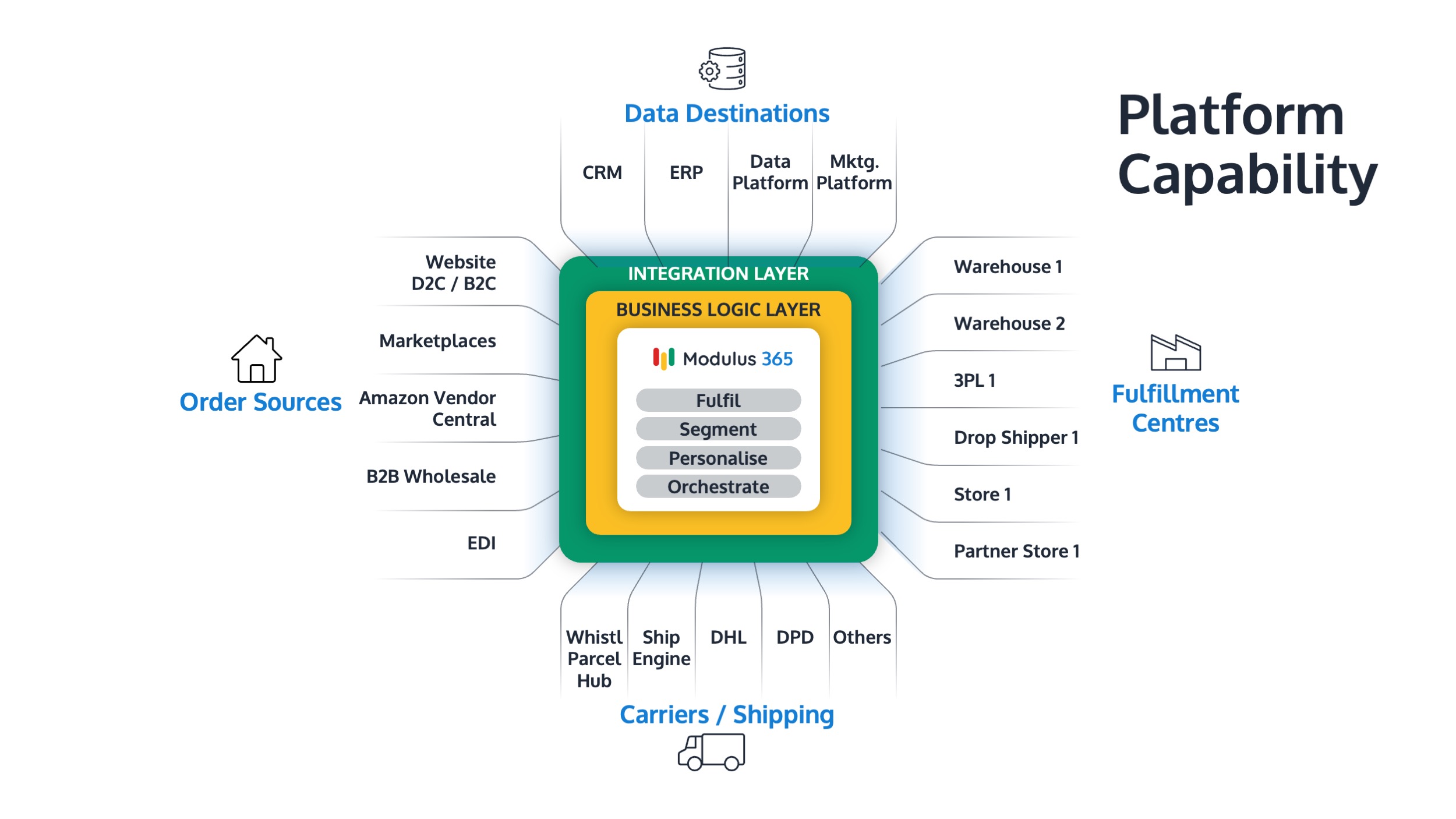
Modulus365 helps businesses connect order management, warehouse workflows, packing, carrier integration, dispatch updates, stock visibility, and fulfilment reporting.
By giving operations teams better visibility of order priority, warehouse progress, packing status, carrier services, and dispatch risk, Modulus365 helps businesses improve dispatch performance and protect customer promises.
For Sage businesses, Modulus365 can work alongside the ERP as the fulfilment operations layer.
👉 Learn more about Modulus365 for Sage.
Related FOA Guides
Dispatch performance depends on order priority, packing flow, carrier rules, stock accuracy, wave planning, and backlog control. These guides will help you improve the full dispatch flow:
- Carrier Selection Rules for Fulfilment Teams
- How to Prioritise Orders in a Busy Warehouse
- How to Improve Packing Bench Efficiency
- Backlog Management: How to Recover Without Panic
- Split Shipments: When to Use Them and When to Avoid Them
- Multi-Channel Fulfilment for Growing Businesses
- Inventory Accuracy: Why It Breaks and How to Fix It
- Fulfilment KPIs Every Operations Leader Should Track
Ready to Improve Dispatch Performance?
If missed cut-offs, dispatch delays, carrier issues, or poor tracking visibility are affecting customer service, Modulus365 can help connect order flow, warehouse execution, packing, carrier labels, dispatch updates, and fulfilment reporting.
Frequently Asked Questions
What is dispatch performance?
Dispatch performance measures how effectively orders leave the warehouse within the expected dispatch window or carrier collection deadline.
How can fulfilment teams improve dispatch performance?
Fulfilment teams can improve dispatch performance by prioritising orders by carrier cut-off, improving packing flow, using clear carrier rules, managing exceptions separately, and tracking dispatch KPIs.
What causes poor dispatch performance?
Poor dispatch performance is often caused by late picking, packing bottlenecks, poor stock accuracy, missed carrier cut-offs, manual label creation, unclear order priorities, or weak dispatch staging.
Why do carrier cut-offs matter?
Carrier cut-offs matter because an order may be picked and packed correctly but still fail the delivery promise if it misses the carrier collection window.
What KPIs should be used to measure dispatch performance?
Useful dispatch KPIs include on-time dispatch rate, orders missed by carrier cut-off, orders packed but not dispatched, dispatch backlog, carrier handover accuracy, and tracking update success rate.