

How to Improve Packing Bench Efficiency
The packing bench is one of the most important control points in fulfilment operations. Even if picking is fast and accurate, poor packing processes can still create delays, errors, missed carrier cut-offs, and customer complaints.
Improving packing bench efficiency helps businesses speed up dispatch, reduce errors, control packaging costs, improve customer experience, and protect fulfilment capacity during busy periods.
This guide explains how to improve packing bench efficiency through better layout, process design, packaging control, quality checks, carrier integration, and operational visibility.
What is Packing Bench Efficiency?
Packing bench efficiency measures how effectively orders move through the packing area after picking and before dispatch.
In simple terms, it answers this question: can the packing team check, pack, label, and release orders quickly and accurately?
Packing bench efficiency is closely linked to fulfilment operations, picking accuracy, carrier performance, packaging cost, and customer experience.
Why Packing Bench Efficiency Matters
The packing bench is where many fulfilment problems are either caught or created.
A good packing process can catch picking errors before they reach the customer. A poor process can create delays, wrong shipments, damaged parcels, incorrect labels, and missed dispatch deadlines.
Poor packing bench efficiency can lead to:
- Missed carrier cut-offs
- Slow dispatch
- Packing errors
- Incorrect labels
- Damaged goods in transit
- Excess packaging cost
- Warehouse congestion
- Higher fulfilment cost per order
- Customer complaints
If the packing bench becomes a bottleneck, the whole fulfilment operation slows down.
Common Causes of Packing Bench Bottlenecks
Packing delays are usually caused by poor layout, missing materials, unclear checks, weak system flow, or carrier-related problems.
- Packing benches are too far from picked orders
- Packaging materials are not within easy reach
- Printers, scanners, or scales are poorly positioned
- Packers need to search for product or order information
- Carrier labels are created manually
- Quality checks are unclear or inconsistent
- Picked orders arrive at the bench in the wrong sequence
- Exceptions and problem orders block normal flow
- Completed parcels pile up before dispatch
The aim is to design a packing area where each order can move smoothly from picked to packed to labelled to dispatched.
1. Design the Packing Bench Around Flow
A packing bench should support a clear physical flow.
A simple structure is:
Picked order arrives → order checked → product packed → label applied → parcel moved to dispatch
The layout should make this flow obvious and easy to follow.
Good packing bench design should include:
- Clear incoming area for picked orders
- Enough space to check products
- Packaging within easy reach
- Scanner, screen, printer, and scales positioned logically
- Clear outgoing area for completed parcels
- Separate space for exceptions and problem orders
Packing should not feel like a series of interruptions. It should feel like a controlled workflow.
2. Keep Packaging Materials Within Easy Reach
Packing slows down when staff constantly leave the bench to find boxes, mailers, tape, labels, void fill, inserts, or documents.
Common packing materials should be stored close to the bench and replenished before they run out.
Review access to:
- Boxes
- Mailers
- Void fill
- Tape
- Labels
- Printer rolls
- Invoices or delivery notes where required
- Return forms or inserts
- Fragile or special handling labels
This is a simple improvement that can reduce wasted movement and improve packing speed.
3. Standardise Packaging Options
Too many packaging options can slow packers down and increase mistakes.
If every order requires a judgement call on box size, void fill, wrapping, or label placement, packing becomes inconsistent.
Standardising packaging helps teams pack faster and more consistently.
Useful actions include:
- Define standard packaging sizes
- Match product groups to packaging types
- Create simple packing rules for fragile or high-value items
- Review packaging waste
- Track damage rates by packaging type
- Remove rarely used packaging from prime bench space
Packaging affects both customer experience and fulfilment cost per order.
4. Use Packing Checks to Catch Errors
The packing bench is often the final opportunity to catch fulfilment errors before the customer receives the order.
A packing check should confirm:
- The correct order
- The correct products
- The correct quantities
- The correct customer or delivery address
- The correct carrier service
- Any special packing instructions
For higher-value or complex orders, businesses may add extra verification steps.
Packing checks should be strong enough to catch errors, but not so slow that they block dispatch unnecessarily.
For related guidance, read: How to Improve Warehouse Picking Accuracy
5. Use Barcode Scanning at Packing
Barcode scanning at the packing bench helps validate that the correct items are being packed into the correct order.
This is especially useful for:
- Multi-line orders
- Similar-looking products
- Bundles and kits
- High-value products
- Batch-picked orders
- Trolley-picked orders
Scanning reduces reliance on visual checks and memory.
A good packing scan can confirm:
- Order reference
- SKU
- Quantity
- Tote or container
- Dispatch confirmation
This improves accuracy and reduces avoidable returns caused by wrong-item shipments.
6. Separate Normal Orders from Exceptions
Exception orders should not block the main packing flow.
Examples of exceptions include:
- Missing items
- Damaged products
- Address issues
- Payment or fraud checks
- Special packing instructions
- Stock discrepancies
- Orders requiring customer confirmation
Create a separate exception area or workflow so normal orders can continue moving.
This prevents one problem order from slowing down the whole packing bench.
7. Position Printers, Scales, and Screens Properly
Packing benches often lose efficiency because equipment is awkwardly placed.
Packers should not need to twist, walk, reach too far, or move around colleagues to print labels, weigh parcels, or view order details.
Review the position of:
- Label printers
- Document printers
- Scales
- Screens
- Scanners
- Keyboard or touchscreens
- Packaging dispensers
- Completed parcel areas
Small ergonomic improvements can improve speed and reduce fatigue over a full shift.
8. Integrate Carrier Labels into the Packing Flow
Carrier label creation can become a major bottleneck if it is manual or disconnected from the packing process.
Ideally, carrier selection and label generation should be connected to the order and packing workflow.
This helps reduce:
- Manual carrier selection
- Incorrect service choices
- Typing errors
- Label mismatches
- Delayed tracking updates
- Missed carrier cut-offs
Carrier integration is especially important when businesses use multiple delivery services or need to meet strict dispatch windows.
9. Manage Completed Parcels Clearly
Once an order is packed, it still needs to move cleanly into dispatch.
Completed parcels should be sorted by carrier, service, collection time, destination, or dispatch lane depending on the operation.
Poor completed-parcel control can cause:
- Parcels missing collection
- Wrong carrier handover
- Delayed dispatch scans
- Tracking issues
- Congestion near packing benches
Clear dispatch lanes help packing teams release completed parcels without cluttering the bench.
10. Monitor Packing Productivity and Errors
Packing performance should be measured, not guessed.
Useful packing KPIs include:
- Orders packed per hour
- Lines packed per hour
- Packing error rate
- Orders waiting to pack
- Average packing time per order
- Missed dispatch cut-offs
- Carrier label errors
- Damaged-in-transit reports
These should sit alongside wider fulfilment KPIs.
11. Balance Picking and Packing Capacity
Packing benches become bottlenecks when picking output is higher than packing capacity.
If picked orders pile up before packing, you may need to review:
- Number of packing benches
- Staff allocation between picking and packing
- Bench layout
- Packaging availability
- Carrier label process
- Order complexity
- Peak trading patterns
The aim is not just fast picking. The aim is smooth order flow from pick to dispatch.
For picking method guidance, read: Picking Methods Explained: Single, Batch, Zone and Wave Picking
12. Prepare Packing Benches for Peak Season
Peak season often exposes packing bench weaknesses.
Before peak trading, review:
- Bench capacity
- Packaging stock
- Label printer reliability
- Carrier cut-off times
- Temporary staff training
- Exception handling process
- Completed parcel staging
- Returns process after peak
Temporary benches may help, but only if the supporting process, equipment, and dispatch flow are ready.
Related guide: How to Manage Peak Season Fulfilment
Packing Bench Efficiency Checklist
| Area | Improvement Action |
|---|---|
| Bench layout | Create a clear flow from picked order to packed parcel |
| Packaging | Keep common materials close and standardise packaging types |
| Checks | Confirm order, SKU, quantity, address, and carrier service |
| Scanning | Use barcode validation for products and orders where possible |
| Exceptions | Move problem orders out of the main packing flow |
| Carrier labels | Integrate label generation into the packing workflow |
| Dispatch | Sort completed parcels by carrier, service, or collection time |
| Performance | Track packing productivity, errors, and missed cut-offs |
How Packing Bench Efficiency Affects Customer Experience
The customer rarely sees the packing bench, but they feel its impact.
A well-run packing process helps ensure:
- The right item is shipped
- The order is protected in transit
- The parcel is labelled correctly
- The delivery service matches the promise
- Tracking information is available
- The order leaves on time
Packing efficiency is therefore not only an internal warehouse issue. It directly affects customer trust.
How Technology Supports Packing Bench Efficiency
A WMS or fulfilment platform can support packing bench efficiency by connecting order data, product validation, packing checks, carrier labels, dispatch confirmation, and reporting.
Useful capabilities include:
- Order scan validation
- Product scan confirmation
- Packing check workflows
- Carrier service selection
- Label generation
- Dispatch confirmation
- Exception handling
- Packing productivity reporting
To understand how warehouse systems fit into fulfilment operations, read: OMS vs WMS: What’s the Difference?
How Modulus365 Helps Improve Packing and Dispatch
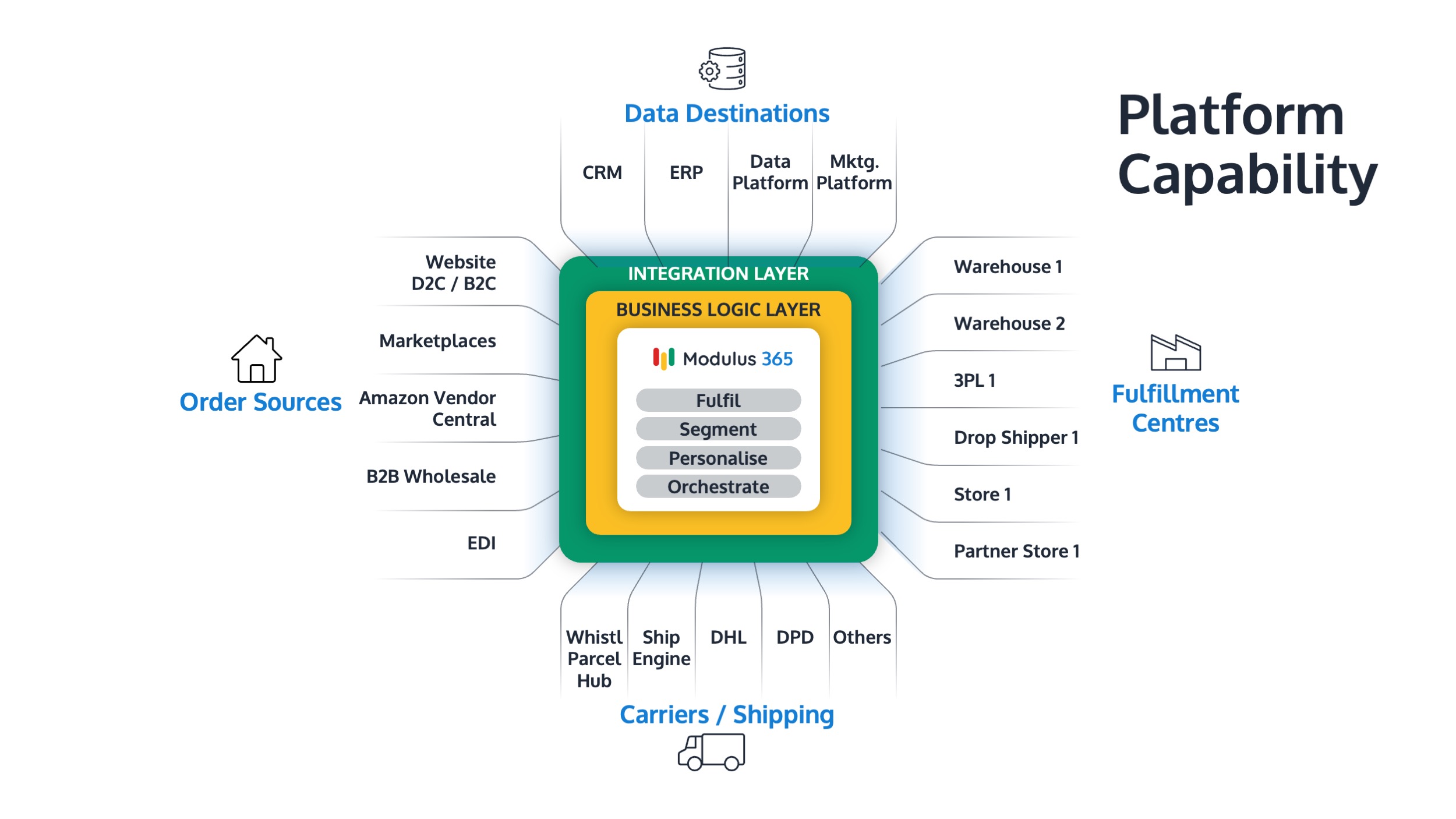
Modulus365 helps businesses connect order management, warehouse workflows, packing checks, carrier integration, inventory visibility, and fulfilment reporting.
By giving teams better control from order capture through picking, packing, dispatch, and tracking, Modulus365 helps fulfilment operations become faster, more accurate, and easier to manage.
For Sage businesses, Modulus365 can work alongside the ERP as the fulfilment operations layer.
👉 Learn more about Modulus365 for Sage.
Related FOA Guides
Packing bench efficiency affects dispatch performance, order accuracy, carrier flow, fulfilment cost, and returns. These guides explain the connected processes:
- How to Improve Dispatch Performance
- Carrier Selection Rules for Fulfilment Teams
- How to Improve Warehouse Picking Accuracy
- Barcode Scanning in Warehouse Operations
- Picking Methods Explained: Single, Batch, Zone and Wave Picking
- Backlog Management: How to Recover Without Panic
- How to Reduce Fulfilment Cost Per Order
- Returns Management Best Practices
Ready to Improve Packing and Dispatch Efficiency?
If packing benches are slowing dispatch, creating errors, or causing missed carrier cut-offs, Modulus365 can help bring better control into your fulfilment workflow.
Frequently Asked Questions
What is packing bench efficiency?
Packing bench efficiency measures how effectively orders move through the packing area after picking and before dispatch, including checks, packaging, labelling, and release to carrier.
How do you improve packing bench efficiency?
You can improve packing bench efficiency by designing a better bench layout, keeping packaging close, standardising packing rules, using barcode checks, integrating carrier labels, and separating exception orders.
Why is the packing bench important in fulfilment?
The packing bench is important because it is often the final control point before dispatch. It helps catch errors, protect products, apply correct labels, and ensure orders leave on time.
What causes packing delays?
Packing delays are often caused by poor layout, missing packaging, manual carrier labels, unclear checks, exception orders, poor equipment placement, and completed parcels blocking dispatch flow.
Can barcode scanning improve packing accuracy?
Yes. Barcode scanning can validate the correct order, product, quantity, and dispatch item at the packing bench, reducing wrong-item shipments and avoidable returns.