

How to Prioritise Orders in a Busy Warehouse
Order prioritisation becomes critical when warehouse teams have more work than they can complete immediately. Without clear rules, staff may pick orders in the wrong sequence, miss carrier cut-offs, delay urgent orders, or create unnecessary backlog.
Good order prioritisation helps fulfilment teams decide what should be picked, packed, and dispatched first — based on service promises, carrier deadlines, stock availability, customer importance, and operational risk.
This guide explains how to prioritise orders in a busy warehouse without creating confusion, delays, or avoidable fulfilment errors.
What is Order Prioritisation?
Order prioritisation is the process of deciding which orders should be fulfilled first when warehouse workload exceeds immediate capacity.
It answers a simple but important question: which orders matter most right now?
Order prioritisation is part of wider order orchestration, because it helps determine how orders are allocated, routed, picked, packed, and dispatched.
Why Order Prioritisation Matters
When every order is treated as equally urgent, the warehouse can quickly lose control.
Poor prioritisation can cause:
- Missed carrier cut-offs
- Delayed premium delivery orders
- Marketplace SLA failures
- Important customers being let down
- Old orders being buried under newer work
- Unnecessary backlog
- Higher customer service pressure
- More manual intervention from supervisors
Clear prioritisation helps warehouse teams work calmly and consistently, especially during busy periods.
When Order Prioritisation Becomes Important
Order prioritisation becomes especially important when:
- Order volume increases suddenly
- Warehouse capacity is limited
- Carrier cut-offs are approaching
- Backlog is building
- Premium delivery orders need protection
- Marketplace SLAs must be met
- Multiple warehouses or fulfilment locations are involved
- Some orders have stock issues or exceptions
If you already have delayed orders building up, read: Backlog Management: How to Recover Without Panic
1. Prioritise by Carrier Cut-Off Time
Carrier cut-off times are one of the most important order prioritisation rules.
If an order is picked and packed after the carrier collection has left, it will not dispatch on time — even if the warehouse completed the work.
Order priority should reflect:
- Carrier collection time
- Service type
- Final label generation time
- Packing capacity
- Dispatch lane preparation
- Carrier-specific rules
For example, next-day orders with a 4pm carrier cut-off may need to be released before standard orders with a later dispatch window.
2. Prioritise by Delivery Promise
Orders should be prioritised according to the promise made to the customer.
Delivery promise may be based on:
- Next-day delivery
- Premium delivery service
- Standard delivery
- Click and collect
- Marketplace delivery SLA
- Wholesale dispatch agreement
- B2B customer service level
Protecting the customer promise is more important than simply picking orders in the sequence they arrived.
3. Prioritise by Sales Channel
Different channels may carry different operational risks.
For example, marketplace orders may have strict SLA rules and penalties, while wholesale orders may have agreed delivery windows or retailer compliance requirements.
Common channels include:
- Ecommerce website
- Marketplaces
- Wholesale orders
- B2B portal orders
- EDI orders
- Retail replenishment orders
- Customer service orders
Order prioritisation should reflect the commercial and operational importance of each channel.
4. Prioritise by Order Age
Order age matters because older orders can quickly become customer service problems.
However, oldest order first is not always the best rule on its own. It should be balanced with service level, stock availability, carrier cut-off, and customer priority.
Useful order-age bands include:
- Same-day orders
- Orders older than 24 hours
- Orders older than 48 hours
- Orders outside SLA
- Orders awaiting stock or exception resolution
Old orders should be visible, not hidden inside a general queue.
5. Prioritise by Stock Availability
Stock availability should strongly influence order priority.
If an order cannot be fulfilled because stock is missing, damaged, quarantined, or awaiting return inspection, it should not block orders that are ready to ship.
Separate orders into:
- Ready to fulfil
- Partially available
- Awaiting replenishment
- Awaiting stock transfer
- Failed pick
- Stock exception
This helps the warehouse continue processing orders that can actually be fulfilled.
For related guidance, read: Inventory Accuracy: Why It Breaks and How to Fix It
6. Prioritise by Customer Type
Some customers may need special prioritisation because of contract terms, commercial value, service level, or operational urgency.
Examples include:
- VIP customers
- Key wholesale accounts
- Retailer compliance orders
- Subscription customers
- Replacement orders after a fulfilment error
- Customer service escalations
Customer priority rules should be clear and controlled. If too many customers become “urgent”, the rule loses value.
7. Prioritise by Order Complexity
Order complexity affects how quickly work can move through the warehouse.
During busy periods, it can be useful to separate simple and complex orders.
| Order Type | Suggested Priority Approach |
|---|---|
| Single-line orders | Useful for quick backlog reduction |
| Multi-line orders | May need stronger picking and packing checks |
| High-value orders | May need extra verification |
| Fragile orders | May require specialist packing |
| Orders with exceptions | Should be handled in a separate queue |
This helps teams process easy wins without letting complex orders disappear from view.
8. Prioritise by Warehouse Workload
If you operate multiple warehouses, stores, 3PLs, or fulfilment locations, order priority should consider workload and capacity.
The best fulfilment location may depend on:
- Stock availability
- Warehouse workload
- Customer location
- Carrier options
- Delivery promise
- Cost to fulfil
- Cut-off times
This is where order prioritisation and order routing become closely connected.
9. Use Priority Queues
Priority queues help warehouse teams focus on the right work at the right time.
Useful queues include:
- Next-day orders
- Orders approaching carrier cut-off
- Marketplace SLA orders
- Oldest overdue orders
- Single-line fast-track orders
- Wholesale or key account orders
- Exception orders
- Orders awaiting stock resolution
Priority queues should be visible to supervisors, warehouse teams, and customer service where relevant.
10. Use Waves to Release Work
Wave picking helps release orders into the warehouse in controlled groups.
Instead of sending all orders to pick at once, orders can be grouped by:
- Carrier cut-off
- Delivery service
- Channel
- Warehouse zone
- Order complexity
- Stock availability
- Customer priority
Wave planning helps prevent warehouse overload and supports more structured dispatch.
Related guide: Picking Methods Explained: Single, Batch, Zone and Wave Picking
11. Keep Exception Orders Separate
Exception orders should not sit inside the normal fulfilment queue.
Examples include:
- Missing stock
- Address issues
- Payment holds
- Fraud checks
- Damaged item replacement
- Customer query awaiting response
- Carrier service unavailable
If exceptions are mixed with normal orders, warehouse teams waste time repeatedly trying to process orders that cannot move.
A separate exception workflow protects normal fulfilment flow.
12. Protect Accuracy While Prioritising Speed
Order prioritisation should not remove essential accuracy checks.
During busy periods, it may be tempting to reduce scanning, packing checks, or supervisor review. This can create wrong-item shipments, returns, refunds, and customer complaints.
Protect key controls:
- Barcode scanning
- Location validation
- Packing bench checks
- High-value order verification
- Clear exception handling
- Carrier service checks
For more on accuracy, read: How to Improve Warehouse Picking Accuracy
Order Prioritisation Framework
A simple order prioritisation framework might look like this:
| Priority Level | Order Type | Action |
|---|---|---|
| Priority 1 | Orders close to carrier cut-off or already at SLA risk | Pick and pack first |
| Priority 2 | Premium delivery, marketplace SLA, key account orders | Release in next wave |
| Priority 3 | Older standard orders with full stock available | Process in age order |
| Priority 4 | Simple single-line orders | Use to reduce backlog quickly |
| Priority 5 | Orders with stock or customer exceptions | Move to exception queue |
The exact rules will vary by business, but the principle is the same: make priority visible, logical, and repeatable.
Order Prioritisation During Peak Season
Peak season makes order prioritisation more important because capacity is under pressure and customer expectations are high.
During peak periods, review priorities several times per day:
- Morning backlog review
- Midday carrier cut-off review
- Afternoon dispatch risk review
- End-of-day exception review
Related guide: How to Manage Peak Season Fulfilment
Order Prioritisation KPIs
Order prioritisation should be measured to check whether it is working.
Useful KPIs include:
- On-time dispatch rate
- Orders missed by service level
- Backlog by age
- Backlog by channel
- Orders close to carrier cut-off
- Orders in exception queue
- Premium delivery success rate
- Marketplace SLA performance
These should sit alongside wider fulfilment KPIs.
How Technology Helps with Order Prioritisation
Technology helps order prioritisation by applying rules consistently and giving teams better visibility of orders, stock, warehouse workload, and carrier deadlines.
A fulfilment platform can support:
- Priority queues
- Order routing rules
- Carrier cut-off logic
- Stock availability checks
- Wave release
- Exception queues
- Backlog dashboards
- Customer service visibility
To understand how systems support fulfilment flow, read: OMS vs WMS: What’s the Difference?
How Modulus365 Helps Prioritise Orders
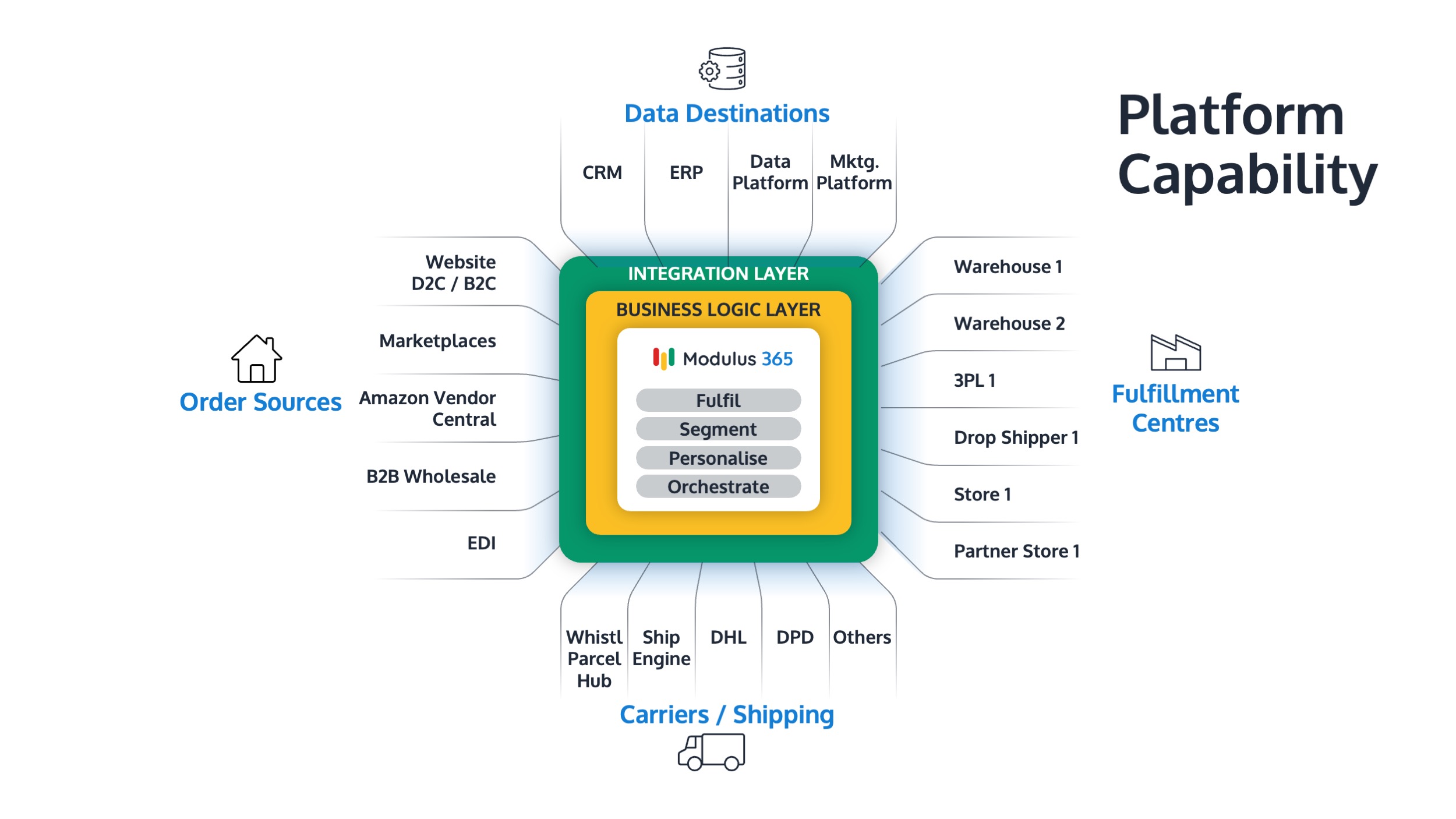
Modulus365 helps businesses connect order orchestration, warehouse workflows, inventory visibility, carrier integrations, exception handling, and fulfilment reporting.
By giving operations teams a clearer view of order priority, stock availability, warehouse progress, and dispatch risk, Modulus365 helps busy warehouses manage fulfilment more calmly and consistently.
For Sage businesses, Modulus365 can work alongside the ERP as the fulfilment operations layer.
👉 Learn more about Modulus365 for Sage.
Related FOA Guides
Order prioritisation works best when it is connected to orchestration, backlog control, stock availability, picking waves, carrier cut-offs, and dispatch performance. These guides explain the supporting processes:
- What is Order Orchestration?
- Backlog Management: How to Recover Without Panic
- Available Stock vs Physical Stock vs Allocated Stock
- Picking Methods Explained: Single, Batch, Zone and Wave Picking
- Carrier Selection Rules for Fulfilment Teams
- How to Improve Dispatch Performance
- Split Shipments: When to Use Them and When to Avoid Them
- How to Manage Peak Season Fulfilment
Ready to Improve Order Prioritisation?
If your warehouse is struggling with urgent orders, missed cut-offs, backlog, or unclear fulfilment priorities, Modulus365 can help bring more control and visibility into order flow and warehouse execution.
Frequently Asked Questions
What is order prioritisation?
Order prioritisation is the process of deciding which orders should be picked, packed, and dispatched first based on rules such as carrier cut-offs, delivery promise, stock availability, customer type, and order age.
Why is order prioritisation important in a warehouse?
Order prioritisation is important because it helps warehouses protect service levels, meet carrier cut-offs, reduce backlog, process urgent orders, and avoid operational confusion.
How should orders be prioritised?
Orders should be prioritised by carrier cut-off, delivery promise, sales channel, order age, stock availability, customer type, order complexity, and operational risk.
What is the difference between order prioritisation and order orchestration?
Order prioritisation decides which orders should be fulfilled first. Order orchestration is broader and includes order routing, stock allocation, fulfilment rules, and dispatch decisions.
How can technology help with order prioritisation?
Technology can help by creating priority queues, applying rules consistently, checking stock availability, managing waves, tracking exceptions, and showing fulfilment risk in real time.