

Fulfilment Cost Per Order: How to Calculate and Reduce It
Fulfilment cost per order is one of the most important metrics for COOs, Ops Directors, Finance teams and Warehouse Managers. It shows how much it really costs to process, pick, pack, ship and support each customer order.
Many businesses know their carrier cost. Some know their warehouse labour cost. Fewer know the true end-to-end cost of fulfilment once labour, packaging, rework, returns, systems, exceptions, carrier issues and customer service effort are included.
This guide explains how to calculate fulfilment cost per order, what costs should be included, how to avoid misleading averages, and how fulfilment teams can reduce cost without damaging accuracy, dispatch performance or customer experience.
What is Fulfilment Cost Per Order?
Fulfilment cost per order measures the average operational cost required to fulfil one customer order.
In simple terms, it answers this question: how much does it cost us to get one order from received to shipped, including the operational work around it?
Basic formula:
Fulfilment Cost Per Order = Total Fulfilment Cost ÷ Total Orders Fulfilled
For example, if your total fulfilment cost for a month is £75,000 and you fulfil 25,000 orders, your fulfilment cost per order is £3.00.
This metric should sit alongside wider fulfilment KPIs, because cost must be balanced with speed, accuracy, capacity and customer experience.
Why Fulfilment Cost Per Order Matters
Fulfilment cost per order matters because fulfilment cost can quietly increase as the business grows.
Order volume may rise, but if labour, errors, returns, carrier costs and manual work increase faster than revenue, margin can be squeezed without the business noticing early enough.
Tracking fulfilment cost per order helps teams:
- Understand operational margin pressure
- Compare cost by channel, order type and warehouse
- Identify expensive fulfilment processes
- Measure the impact of automation
- Control labour and carrier costs
- Understand the cost of errors and rework
- Plan growth and peak season more accurately
- Make better pricing, delivery and service-level decisions
This is not just a finance metric. It is an operational control metric.
Fulfilment Cost Per Order vs Shipping Cost Per Order
Fulfilment cost per order and shipping cost per order are not the same.
| Metric | What It Includes | Limitation |
|---|---|---|
| Shipping cost per order | Carrier or postage cost | Does not include warehouse labour, packaging, rework, returns or systems |
| Fulfilment cost per order | End-to-end operational cost of fulfilling the order | Requires better cost allocation and operational data |
Shipping cost is only one part of fulfilment cost. A business can reduce shipping cost but still increase total fulfilment cost if errors, labour or returns rise.
What Should Be Included in Fulfilment Cost Per Order?
The best version of fulfilment cost per order includes all meaningful operational costs connected to order fulfilment.
Common cost categories include:
- Warehouse labour
- Packing labour
- Supervisory labour
- Temporary labour
- Overtime
- Packaging materials
- Carrier and postage costs
- Carrier surcharges
- Returns processing
- Replacement shipments
- Customer service effort caused by fulfilment issues
- Rework and correction time
- Warehouse software and systems
- Scanner, printer and label consumables
- 3PL fees where relevant
Some businesses start with a simpler version and improve the calculation over time. That is fine, as long as the definition is consistent and understood.
1. Labour Cost Per Order
Labour is often one of the biggest components of fulfilment cost per order.
Formula:
Labour Cost Per Order = Total Fulfilment Labour Cost ÷ Orders Fulfilled
Labour costs may include:
- Picking labour
- Packing labour
- Goods-in labour
- Replenishment labour
- Dispatch labour
- Returns processing labour
- Supervisory labour
- Temporary labour
- Overtime
Labour cost per order should be reviewed alongside labour efficiency metrics, because the goal is not only to reduce labour cost, but to use labour more effectively.
2. Packaging Cost Per Order
Packaging cost per order measures the average packaging material cost used to fulfil each order.
Formula:
Packaging Cost Per Order = Total Packaging Cost ÷ Orders Shipped
Packaging costs may include:
- Boxes
- Mailers
- Void fill
- Tape
- Labels
- Inserts
- Protective packaging
- Special packaging for fragile or premium products
Packaging cost should be balanced with damage rate. Reducing packaging too aggressively can increase damaged-item returns, refunds and replacement shipments.
Related guide: How to Improve Packing Bench Efficiency.
3. Carrier Cost Per Order
Carrier cost per order measures the average delivery cost per order.
Formula:
Carrier Cost Per Order = Total Carrier Cost ÷ Orders Shipped
This should include more than headline shipping charges where possible.
Carrier-related costs may include:
- Base shipment cost
- Fuel surcharges
- Remote area surcharges
- Oversized parcel charges
- International charges
- Failed delivery charges
- Return-to-sender charges
- Replacement shipment cost
- Claims not recovered
For a deeper carrier view, read: Carrier Performance Metrics Every Fulfilment Team Should Track.
4. Returns Cost Per Order
Returns cost per order measures the cost of returns spread across the total order base.
Formula:
Returns Cost Per Order = Total Returns Cost ÷ Total Orders Shipped
Returns cost may include:
- Return postage
- Customer service time
- Returns inspection labour
- Refund processing
- Replacement shipping
- Stock write-offs
- Discounted resale
- Packaging waste
- Carrier claims administration
Returns should be split between customer-choice returns and fulfilment-failure returns. Fulfilment-failure returns are usually more actionable for operations teams.
Related guide: Returns Metrics: What Returns Data Tells You About Fulfilment Performance.
5. Rework Cost Per Order
Rework cost is one of the most commonly hidden fulfilment costs.
Rework happens when the team has to fix something that should have been right the first time.
Examples include:
- Repicking wrong items
- Repacking orders
- Correcting labels
- Investigating failed picks
- Resolving stock discrepancies
- Processing replacement shipments
- Correcting customer address issues
- Manually fixing order or system errors
Formula:
Rework Cost Per Order = Total Rework Cost ÷ Total Orders Shipped
Even if this is estimated at first, tracking rework cost helps reveal where operational waste is hiding.
6. Exception Cost Per Order
Exception cost per order measures the cost of dealing with blocked, delayed or manually handled orders.
Exceptions may include:
- Failed picks
- Stock discrepancies
- Address problems
- Carrier service issues
- Payment or fraud holds
- Customer clarification
- Split shipment decisions
- Manual order corrections
- System or integration issues
Formula:
Exception Cost Per Order = Total Exception Handling Cost ÷ Total Orders Shipped
Exception cost is often difficult to calculate precisely, but it is important because exceptions consume supervisor time, customer service effort and warehouse capacity.
Related guide: Exception Metrics: The Hidden KPI Layer Most Fulfilment Teams Ignore.
7. Software and Systems Cost Per Order
Software and systems cost per order measures the cost of the tools used to process and fulfil orders.
This may include:
- OMS or WMS software
- ERP fulfilment modules
- Carrier platforms
- Marketplace connectors
- Barcode scanning software
- 3PL portals
- Integration tools
- Hardware support where allocated
Formula:
Software Cost Per Order = Total Fulfilment Software Cost ÷ Orders Processed
This should not be viewed only as a cost. Good systems should reduce labour, errors, rework, stock issues and manual intervention.
Related guide: What is Fulfilment Automation?.
8. 3PL Cost Per Order
If a business uses a third-party logistics provider, 3PL cost per order should be measured separately.
3PL costs may include:
- Pick and pack fees
- Storage fees
- Inbound handling
- Outbound handling
- Packaging charges
- Returns fees
- Special project fees
- Account management charges
- Carrier charges passed through
Formula:
3PL Cost Per Order = Total 3PL Fulfilment Cost ÷ Orders Fulfilled by 3PL
3PL cost should be measured by channel, order type, product category and service level where possible.
Simple Fulfilment Cost Per Order Example
| Cost Category | Monthly Cost |
|---|---|
| Warehouse labour | £35,000 |
| Packaging | £8,000 |
| Carrier costs | £42,000 |
| Returns processing | £6,000 |
| Rework and exceptions | £4,000 |
| Fulfilment software and systems | £5,000 |
| Total fulfilment cost | £100,000 |
If the business fulfilled 25,000 orders that month:
Fulfilment Cost Per Order = £100,000 ÷ 25,000 = £4.00
The value of this calculation is not only the £4.00 figure. The real value comes from understanding which cost categories are increasing and why.
Why Average Fulfilment Cost Per Order Can Be Misleading
A single average cost per order can hide major differences between order types.
For example:
- A single-line ecommerce order may be cheap to fulfil
- A complex B2B order may require more picking and packing labour
- An international order may have higher carrier and documentation costs
- A fragile product may need more packaging and create more damage risk
- A returned order may create additional inspection and restocking cost
- A split shipment may double carrier and packing activity
Average cost is useful, but segmented cost is far more useful for decision-making.
Fulfilment Cost Per Order by Channel
Different sales channels can have very different fulfilment costs.
Track cost per order by:
- Ecommerce website
- Marketplace
- Wholesale
- B2B portal
- EDI
- Retail replenishment
- Subscription orders
- Replacement orders
One channel may generate high revenue but also create high fulfilment cost through returns, split shipments, carrier rules or manual processing.
Related guide: Multi-Channel Fulfilment for Growing Businesses.
Fulfilment Cost Per Order by Order Type
Order type often has a bigger cost impact than channel.
Track cost per order for:
- Single-line orders
- Multi-line orders
- Bulk orders
- Wholesale orders
- Fragile orders
- Heavy or oversized orders
- High-value orders
- Bundles and kits
- Split shipments
- International orders
This helps identify which types of orders are genuinely profitable once fulfilment cost is included.
Fulfilment Cost Per Order by Warehouse or Fulfilment Location
If a business operates more than one warehouse, store fulfilment location or 3PL, cost should be tracked by fulfilment location.
This can reveal:
- Different labour productivity levels
- Different carrier cost profiles
- Warehouse layout or congestion issues
- 3PL cost differences
- Regional stock placement issues
- Different returns or damage rates
- Different exception rates
Location-level cost data helps operations leaders decide where stock should sit and how fulfilment should be routed.
Fulfilment Cost Per Order by Customer Promise
Different service promises create different cost structures.
Track cost by:
- Same-day delivery
- Next-day delivery
- Standard delivery
- Economy delivery
- International delivery
- Wholesale delivery window
- Replacement orders
- VIP or key account orders
Premium delivery promises may be commercially sensible, but only if pricing, margin and operational cost are understood.
How Errors Increase Fulfilment Cost Per Order
Fulfilment errors increase cost because they create rework and customer recovery activity.
Common cost drivers include:
- Wrong item sent
- Missing item
- Damaged item
- Incorrect carrier service
- Late dispatch
- Failed pick
- Manual stock adjustment
- Replacement shipment
- Refund or goodwill credit
This is why cost per order should be reviewed alongside order accuracy rate and perfect order rate.
How Backlog Increases Fulfilment Cost Per Order
Backlog usually increases fulfilment cost because delayed work creates pressure and inefficiency.
Backlog can lead to:
- Overtime
- Temporary labour
- Manual prioritisation
- Expedited shipping
- Customer service contact
- Rework
- Missed carrier cut-offs
- Reduced team productivity
Backlog is not only a service issue. It is also a cost issue.
Related guide: Backlog Metrics: How to Measure Fulfilment Risk Before Customers Complain.
How Split Shipments Affect Fulfilment Cost Per Order
Split shipments can significantly increase fulfilment cost per order.
A split shipment may add:
- Additional picking activity
- Additional packing activity
- Additional packaging
- Multiple carrier labels
- Multiple shipping charges
- Additional customer communication
- More tracking complexity
- Higher return or complaint risk
Split shipments can be useful in some situations, but they should be controlled by rules and cost visibility.
Related guide: Split Shipments: When to Use Them and When to Avoid Them.
Fulfilment Cost Per Order Example Dashboard
| Metric | Example Value | What It Suggests |
|---|---|---|
| Total fulfilment cost per order | £4.00 | Headline fulfilment cost |
| Labour cost per order | £1.40 | Labour efficiency impact |
| Carrier cost per order | £1.68 | Delivery cost impact |
| Packaging cost per order | £0.32 | Material cost impact |
| Returns cost per order | £0.24 | Post-dispatch cost impact |
| Rework and exception cost per order | £0.16 | Hidden operational waste |
| Software cost per order | £0.20 | Systems cost allocation |
This dashboard makes it easier to see where the cost sits and where improvement should focus.
Good vs Weak Fulfilment Cost Measurement
| Weak Measurement | Better Measurement |
|---|---|
| Only track carrier cost | Track labour, packaging, carrier, returns, rework, exceptions and systems |
| Use one average cost for all orders | Segment cost by channel, order type, warehouse and customer promise |
| Ignore returns and replacements | Include returns cost and fulfilment-failure recovery cost |
| Ignore rework | Estimate the cost of corrections, failed picks and manual intervention |
| Measure cost but not accuracy | Review cost alongside order accuracy and perfect order rate |
| Only report monthly | Use weekly operational views for trend and root-cause improvement |
How to Reduce Fulfilment Cost Per Order
Reducing fulfilment cost per order is not about cutting corners. The best reductions usually come from improving process control, reducing waste and removing manual work.
Practical ways to reduce fulfilment cost include:
- Improve labour efficiency
- Reduce warehouse walking time
- Use better picking methods
- Improve pick and order accuracy
- Reduce failed picks
- Improve stock accuracy
- Improve packing bench flow
- Reduce avoidable returns
- Use carrier selection rules
- Control split shipments
- Reduce exception volume
- Automate manual order, warehouse and carrier processes
For the operational improvement version of this topic, read: How to Reduce Fulfilment Cost Per Order.
Cost Reduction Mistakes to Avoid
Cost reduction becomes risky when teams reduce visible cost while increasing hidden cost.
Common mistakes include:
- Reducing labour without fixing process bottlenecks
- Choosing the cheapest carrier despite poor delivery performance
- Reducing packaging and increasing damage returns
- Removing checks and increasing order errors
- Ignoring returns processing cost
- Ignoring exception handling labour
- Using automation without process discipline
- Measuring cost without customer experience impact
The goal is not the lowest possible fulfilment cost. The goal is the best sustainable cost for the promised service level.
Fulfilment Cost Per Order and Peak Season
Peak season can increase fulfilment cost per order even when order volume rises.
Peak cost drivers may include:
- Overtime
- Temporary labour
- Lower temporary staff productivity
- More errors and rework
- Premium carrier services
- Carrier surcharges
- Packaging pressure
- Returns volume after peak
- Exception handling
- Backlog recovery
Before peak, teams should model expected fulfilment cost per order under different volume and labour scenarios.
Related guide: Capacity Planning Metrics for Fulfilment Operations.
Fulfilment Cost Per Order Improvement Checklist
| Area | Action |
|---|---|
| Definition | Agree which cost categories are included in fulfilment cost per order |
| Labour | Track labour cost per order and orders per labour hour |
| Packaging | Measure packaging cost without increasing damage rate |
| Carrier | Track carrier cost-to-serve, not just headline shipping cost |
| Returns | Include returns processing, replacement shipping and write-off cost |
| Rework | Estimate the cost of errors, corrections and failed picks |
| Exceptions | Measure manual intervention and exception handling cost |
| Segmentation | Review cost by channel, order type, warehouse and customer promise |
How Fulfilment Cost Per Order Connects to Other Metrics
Fulfilment cost per order connects directly to several operational metrics.
- Labour efficiency metrics — labour is often a major cost component
- Warehouse productivity metrics — productivity affects cost per order
- Order accuracy rate — errors create rework and replacement cost
- Perfect order rate — fulfilment failures increase cost and reduce customer trust
- Carrier performance metrics — failed delivery, damage and claims affect true delivery cost
- Returns metrics — returns create additional labour, postage and stock recovery cost
- Exception metrics — blocked orders consume hidden operational time
- Capacity planning metrics — poor capacity planning often increases overtime and backlog cost
This is why fulfilment cost per order should be reviewed as part of a full operational performance dashboard, not as a standalone finance number.
How Technology Helps Reduce Fulfilment Cost Per Order
Technology helps reduce fulfilment cost per order by reducing manual work, improving visibility, preventing errors and helping teams prioritise work more effectively.
A fulfilment platform can support:
- Automated order import
- Stock allocation rules
- Digital pick lists
- Barcode scanning
- Pick route sequencing
- Packing bench workflows
- Carrier label generation
- Carrier selection rules
- Returns workflows
- Exception queues
- Backlog dashboards
- Fulfilment cost and KPI reporting
For a broader automation guide, read: What is Fulfilment Automation?.
How Modulus365 Helps Improve Fulfilment Cost Visibility
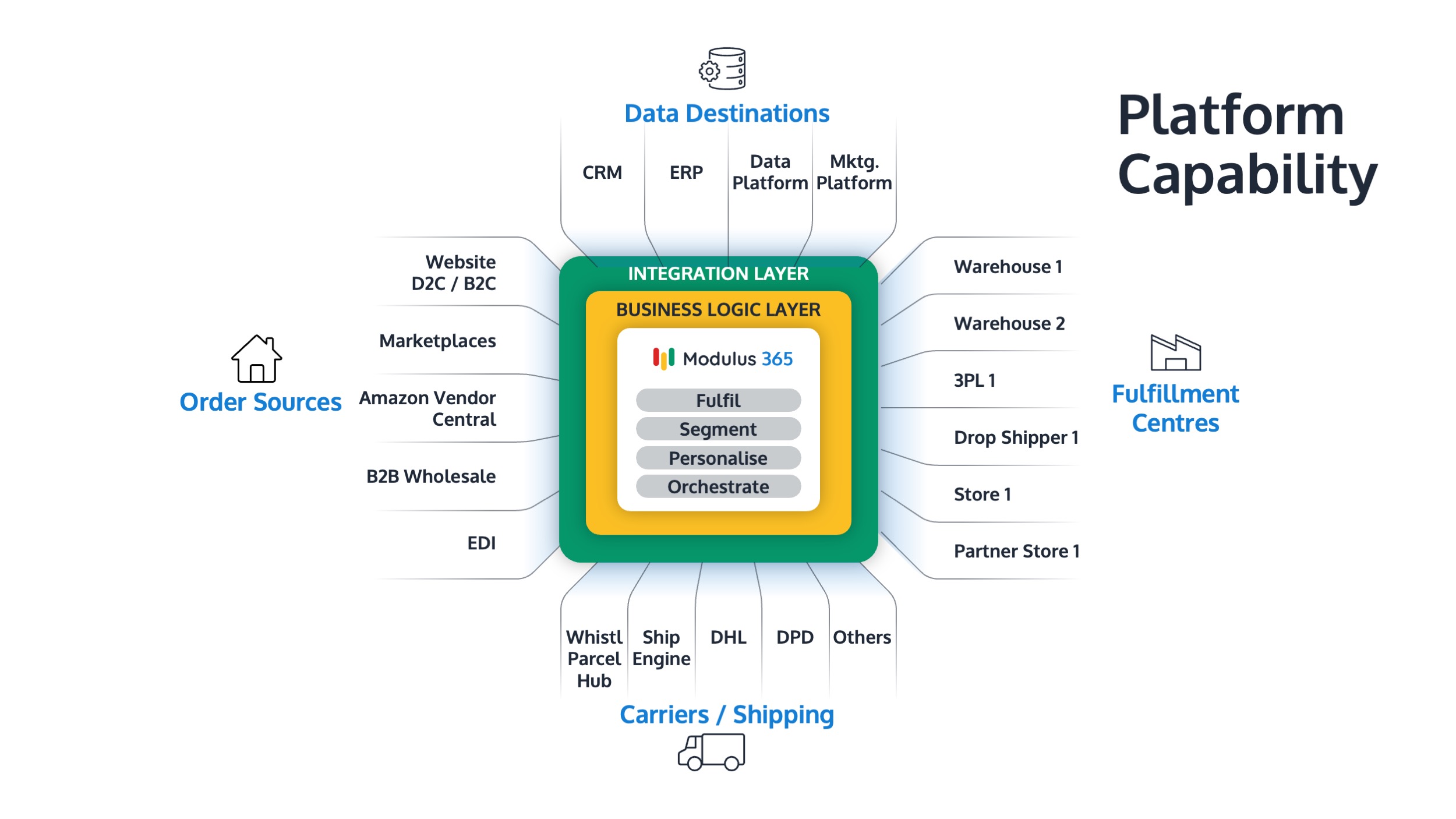
Modulus365 helps businesses connect order management, warehouse workflows, inventory visibility, barcode scanning, packing, carrier integration, returns, exception handling and fulfilment reporting.
By reducing manual work and giving operations teams better visibility of labour pressure, stock issues, dispatch risk, carrier flow, returns and exceptions, Modulus365 helps businesses understand and reduce fulfilment cost per order without losing control of service quality.
For Sage businesses, Modulus365 can work alongside the ERP as the fulfilment operations layer.
👉 Learn more about Modulus365 for Sage.
Related FOA Guides
Fulfilment cost per order should be reviewed alongside labour, warehouse productivity, carrier cost, returns, exceptions, accuracy and capacity. These guides explain the main cost drivers:
- How to Reduce Fulfilment Cost Per Order
- Labour Efficiency Metrics for Warehouse and Fulfilment Teams
- Warehouse Productivity Metrics: What to Track Without Creating Bad Behaviour
- Carrier Performance Metrics Every Fulfilment Team Should Track
- Returns Metrics: What Returns Data Tells You About Fulfilment Performance
- Exception Metrics: The Hidden KPI Layer Most Fulfilment Teams Ignore
- Order Accuracy Rate: Why It Matters and How to Improve It
- Capacity Planning Metrics for Fulfilment Operations
Ready to Improve Fulfilment Cost Visibility?
If fulfilment cost is rising because of labour pressure, carrier costs, rework, returns, exceptions or manual processes, Modulus365 can help bring better visibility and control into the operation.
Frequently Asked Questions
What is fulfilment cost per order?
Fulfilment cost per order measures the average operational cost required to process, pick, pack, ship and support one customer order.
How do you calculate fulfilment cost per order?
Fulfilment cost per order is calculated by dividing total fulfilment cost by total orders fulfilled during the same period.
What should be included in fulfilment cost per order?
Fulfilment cost per order should include labour, packaging, carrier costs, returns processing, rework, exceptions, fulfilment software, consumables and 3PL fees where relevant.
Is fulfilment cost per order the same as shipping cost?
No. Shipping cost is only the carrier or postage cost. Fulfilment cost per order includes the wider operational cost of fulfilling the order, including labour, packaging, returns, rework and systems.
How can businesses reduce fulfilment cost per order?
Businesses can reduce fulfilment cost per order by improving labour efficiency, reducing walking time, improving accuracy, reducing returns, using better carrier rules, reducing exceptions and automating manual processes.