

Order Accuracy Rate: Why It Matters and How to Improve It
Order accuracy rate is one of the most important fulfilment metrics for any business that ships physical products. It measures whether customers receive the right items, in the right quantities, without fulfilment errors.
For operations leaders, warehouse managers and COOs, order accuracy is more than a warehouse KPI. It affects customer trust, returns, customer service workload, replacement shipments, stock accuracy, fulfilment cost and brand reputation.
This guide explains what order accuracy rate means, how to calculate it, why it matters, and how fulfilment teams can improve it through better picking, packing, barcode scanning, stock control and process discipline.
What is Order Accuracy Rate?
Order accuracy rate measures the percentage of customer orders fulfilled correctly.
In simple terms, it answers this question: did the customer receive exactly what they ordered?
Formula:
Order Accuracy Rate = Accurate Orders ÷ Total Orders Shipped × 100
For example, if you ship 10,000 orders in a month and 9,850 are fulfilled correctly, your order accuracy rate is 98.5%.
Order accuracy should sit alongside wider fulfilment KPIs, because it connects warehouse execution, customer experience, stock accuracy, returns and operational cost.
What Counts as an Accurate Order?
An accurate order is usually one where the customer receives:
- The correct product
- The correct quantity
- The correct variant, size, colour or specification
- The correct bundle or kit components
- The correct delivery documentation where required
- No fulfilment-related damage
- No missing items
- No incorrectly substituted items
Different businesses may define order accuracy slightly differently, but the key principle is simple: the order should match the customer promise.
Order Accuracy vs Picking Accuracy
Order accuracy and picking accuracy are closely related, but they are not the same.
| KPI | What It Measures | Where Problems Usually Appear |
|---|---|---|
| Picking accuracy | Whether the correct items were picked from warehouse locations | During picking |
| Order accuracy | Whether the customer received the correct complete order | Across picking, packing and dispatch |
A picking error may be caught at the packing bench before the customer receives the wrong item. In that case, picking accuracy was affected, but customer-facing order accuracy may still be protected.
For more on the warehouse execution side, read: How to Improve Warehouse Picking Accuracy.
Why Order Accuracy Rate Matters
Poor order accuracy creates cost and friction across the whole business.
Every incorrect order can create:
- Customer complaints
- Replacement shipments
- Return postage costs
- Refunds or goodwill credits
- Customer service workload
- Warehouse rework
- Stock discrepancies
- Marketplace or retailer service issues
- Reduced customer trust
Order accuracy is therefore not just about avoiding mistakes. It is about protecting margin, customer experience and operational credibility.
The Hidden Cost of Inaccurate Orders
A wrong order usually costs more than the original pick and pack activity.
The true cost may include:
- Investigating the issue
- Customer service time
- Refund or replacement decision
- Picking and packing a replacement
- Additional carrier cost
- Return processing
- Stock correction
- Potential loss of repeat purchase
This is why order accuracy has a direct impact on fulfilment cost per order.
Common Causes of Poor Order Accuracy
Order accuracy problems usually come from process weaknesses rather than individual carelessness.
Common causes include:
- Similar-looking products stored close together
- Poor bin and location labelling
- Paper pick lists
- No barcode scanning validation
- Poor product descriptions or SKU naming
- Weak packing checks
- Incorrect stock locations
- Rushed picking during peak periods
- Unclear bundle or kit instructions
- Manual substitutions
- Batch-picked orders being sorted incorrectly
- Returns or damaged stock being mixed into available stock
Improving order accuracy means designing the fulfilment process so the correct action is easier than the wrong one.
1. Measure Errors by Type
Order accuracy rate gives the headline number, but error types explain what is actually going wrong.
Useful error categories include:
- Wrong item sent
- Wrong quantity sent
- Missing item
- Incorrect size, colour or variant
- Wrong bundle or kit component
- Damaged item caused by fulfilment or packaging
- Incorrect substitution
- Wrong customer or order label
- Incorrect documentation
Without error categories, teams may know that accuracy is poor but not know where to improve.
2. Measure Errors by Process Stage
Order errors can happen at different points in the fulfilment process.
Track whether errors are caused by:
- Receiving
- Putaway
- Stock movement
- Picking
- Packing
- Carrier labelling
- Dispatch staging
- Returns processing
This helps teams fix the root cause rather than only dealing with the customer complaint after the event.
3. Improve Warehouse Location Labelling
Clear location labelling reduces the chance of pickers selecting the wrong product or location.
Good location labels should be:
- Unique
- Easy to read
- Consistent
- Logical
- Visible from normal working positions
- Suitable for barcode scanning where possible
Poor location structure often causes both picking errors and inventory accuracy issues.
Related guide: Warehouse Layout Optimisation for Faster Fulfilment.
4. Separate Similar Products
Similar products stored next to each other are a common cause of order errors.
This is especially true for:
- Different sizes of the same product
- Similar colours
- Similar packaging
- Single units and multi-packs
- Product variants
- Products with similar SKU codes
Where possible, separate easily confused products or use stronger visual labels and scanning validation.
5. Use Barcode Scanning
Barcode scanning is one of the most effective ways to improve order accuracy.
Scanning can validate:
- Correct location
- Correct SKU
- Correct quantity
- Correct tote or order
- Correct item at packing
- Correct dispatch item
This reduces reliance on memory, manual checks and visual recognition.
Read: Barcode Scanning in Warehouse Operations.
6. Strengthen Packing Bench Checks
The packing bench is often the final opportunity to catch an error before the customer receives the order.
A strong packing check should confirm:
- Correct order
- Correct items
- Correct quantities
- Correct customer or delivery address
- Correct carrier service
- Any special packing instructions
Packing checks are especially important for multi-line orders, bundles, high-value items, similar products and batch-picked orders.
Related guide: How to Improve Packing Bench Efficiency.
7. Improve Product Data
Bad product data can quietly create fulfilment errors.
Warehouse teams need product information that is clear, consistent and easy to identify.
Review:
- SKU naming
- Product descriptions
- Variant labels
- Barcode coverage
- Product images where used in systems
- Bundle and kit definitions
- Pack sizes
- Unit of measure
If product data is confusing, even good warehouse teams can make avoidable mistakes.
8. Improve Inventory Accuracy
Order accuracy depends heavily on stock accuracy.
If stock is in the wrong location, damaged stock is shown as available, or system stock does not match physical stock, errors become more likely.
Inventory issues can cause:
- Failed picks
- Wrong substitutions
- Manual workarounds
- Delayed orders
- Incorrect stock adjustments
- Customer service issues
For more detail, read: Inventory Accuracy: Why It Breaks and How to Fix It.
9. Track Accuracy by Channel
Different sales channels can create different accuracy risks.
Track order accuracy separately for:
- Ecommerce website orders
- Marketplace orders
- Wholesale orders
- B2B portal orders
- EDI orders
- Retail replenishment orders
- Replacement orders
This can reveal whether specific channels, order types or workflows create more errors than others.
Related guide: Multi-Channel Fulfilment for Growing Businesses.
10. Track Accuracy by Order Type
Some order types are naturally more error-prone.
Useful categories include:
- Single-line orders
- Multi-line orders
- High-value orders
- Bundles and kits
- Wholesale orders
- International orders
- Orders with substitutions
- Orders picked in batches
This helps teams apply extra controls where risk is highest instead of slowing every order unnecessarily.
11. Protect Accuracy During Peak Season
Order accuracy often drops when teams are under pressure.
During peak season, businesses may be tempted to remove checks in order to move faster. That can create more returns, complaints and replacement shipments after peak.
To protect accuracy during peak:
- Keep barcode scanning in place
- Maintain packing checks
- Use experienced staff for exception orders
- Separate simple and complex orders
- Monitor error rates daily
- Review temporary staff training
- Keep similar products clearly separated
Related guide: How to Manage Peak Season Fulfilment.
12. Connect Accuracy to Returns Data
Returns data can reveal order accuracy problems.
Return reasons such as wrong item sent, missing item, damaged item or incorrect variant may point back to fulfilment accuracy issues.
Track returns by:
- Return reason
- SKU
- Sales channel
- Warehouse
- Picker or packing process where appropriate
- Order type
For more on returns analysis, read: Returns Management Best Practices.
Order Accuracy Rate Example
| Metric | Value |
|---|---|
| Total orders shipped | 20,000 |
| Orders fulfilled correctly | 19,760 |
| Orders with fulfilment errors | 240 |
| Order accuracy rate | 98.8% |
A 98.8% order accuracy rate may sound strong, but it still means 240 customers received an inaccurate fulfilment experience. For a scaling business, that can create significant hidden cost.
Order Accuracy Improvement Checklist
| Area | Improvement Action |
|---|---|
| Error tracking | Track error types, reason codes and process stage |
| Locations | Use clear, logical and scannable warehouse locations |
| Product separation | Separate similar-looking products where possible |
| Barcode scanning | Validate SKU, location, quantity, tote and order |
| Packing checks | Confirm products before dispatch |
| Product data | Improve SKU naming, variant data, barcodes and bundle definitions |
| Stock accuracy | Reduce failed picks and wrong-location stock |
| Returns data | Use return reasons to identify fulfilment error patterns |
What is a Good Order Accuracy Rate?
Many fulfilment operations aim for order accuracy above 99%, but the right target depends on product complexity, order volume, customer expectations and channel requirements.
A high-volume ecommerce operation may need very high accuracy because even a small error percentage creates many customer issues. A complex B2B or wholesale operation may need to measure accuracy by line, order type and customer impact.
The most important question is not only “what is the percentage?” but also “which errors are still happening, why are they happening and what are they costing us?”
How Order Accuracy Connects to Other Metrics
Order accuracy should not be viewed in isolation.
It connects directly to:
- Picking accuracy — many order errors begin during picking
- Packing productivity — rushing packing can reduce accuracy
- Returns rate — wrong items and missing items often become returns
- Inventory accuracy — stock errors can create fulfilment errors
- Fulfilment cost per order — errors create rework and replacement cost
- Perfect order rate — order accuracy is one part of the full customer promise
- Customer complaint rate — inaccurate orders create support workload
For a broader view, read: Perfect Order Rate: The Fulfilment KPI That Combines Speed, Accuracy and Customer Experience.
How Technology Helps Improve Order Accuracy
Technology helps improve order accuracy by reducing manual steps and validating warehouse activity at key points.
A fulfilment platform can support:
- Barcode scanning
- Digital pick lists
- Location validation
- SKU validation
- Quantity confirmation
- Tote and order validation
- Packing bench checks
- Exception workflows
- Returns reason reporting
- Fulfilment KPI dashboards
For a broader automation guide, read: What is Fulfilment Automation?.
How Modulus365 Helps Improve Order Accuracy
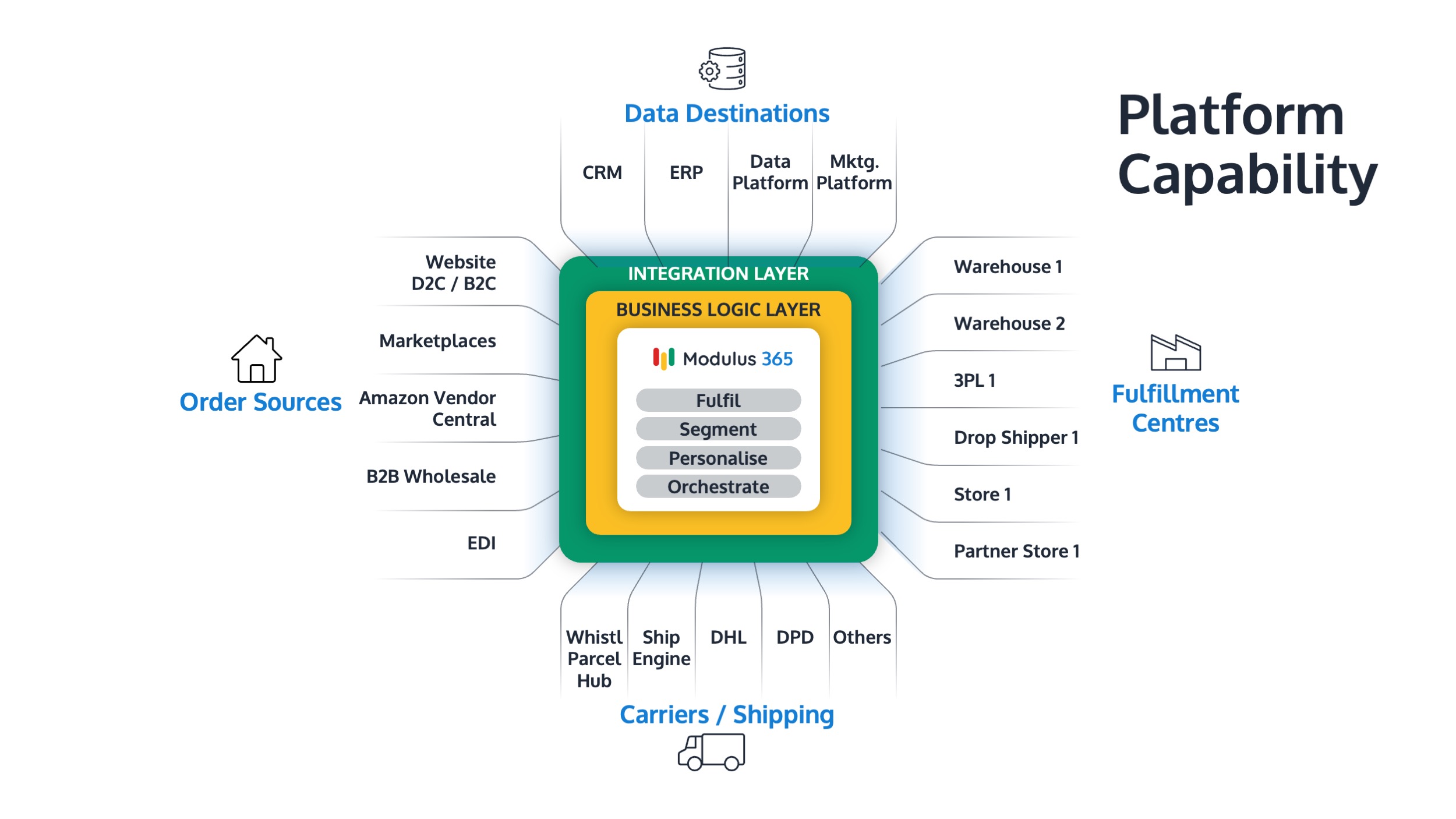
Modulus365 helps businesses connect order management, warehouse workflows, barcode scanning, inventory visibility, packing checks, returns processes and fulfilment reporting.
By giving teams better control of picking, packing, stock movement and exception handling, Modulus365 helps reduce avoidable fulfilment errors and improve order accuracy as order volumes grow.
For Sage businesses, Modulus365 can work alongside the ERP as the fulfilment operations layer.
👉 Learn more about Modulus365 for Sage.
Related FOA Guides
Order accuracy is closely linked to picking accuracy, packing checks, stock accuracy, barcode scanning, returns and perfect order performance. These guides explain the connected areas:
- Fulfilment KPIs Every Operations Leader Should Track
- How to Improve Warehouse Picking Accuracy
- Pick Rate vs Pick Accuracy: Why Speed Alone Is a Dangerous KPI
- Barcode Scanning in Warehouse Operations
- How to Improve Packing Bench Efficiency
- Inventory Accuracy Metrics: How to Know Whether You Can Trust Your Stock
- Returns Metrics: What Returns Data Tells You About Fulfilment Performance
- Perfect Order Rate: The Fulfilment KPI That Combines Speed, Accuracy and Customer Experience
Ready to Improve Order Accuracy?
If wrong items, missing products, picking errors or packing mistakes are creating cost and customer service pressure, Modulus365 can help bring better control and visibility into your fulfilment operation.
Frequently Asked Questions
What is order accuracy rate?
Order accuracy rate measures the percentage of customer orders fulfilled correctly, with the right products, quantities and order details.
How do you calculate order accuracy rate?
Order accuracy rate is calculated by dividing accurate orders by total orders shipped, then multiplying by 100.
What is the difference between order accuracy and picking accuracy?
Picking accuracy measures whether warehouse staff picked the correct items. Order accuracy measures whether the customer received the correct complete order.
What causes poor order accuracy?
Poor order accuracy is often caused by picking errors, poor product labelling, weak packing checks, inaccurate stock locations, similar products stored together, manual processes and poor product data.
How can fulfilment teams improve order accuracy?
Fulfilment teams can improve order accuracy by using barcode scanning, clear warehouse locations, stronger packing checks, better product data, improved stock accuracy and regular error reason analysis.