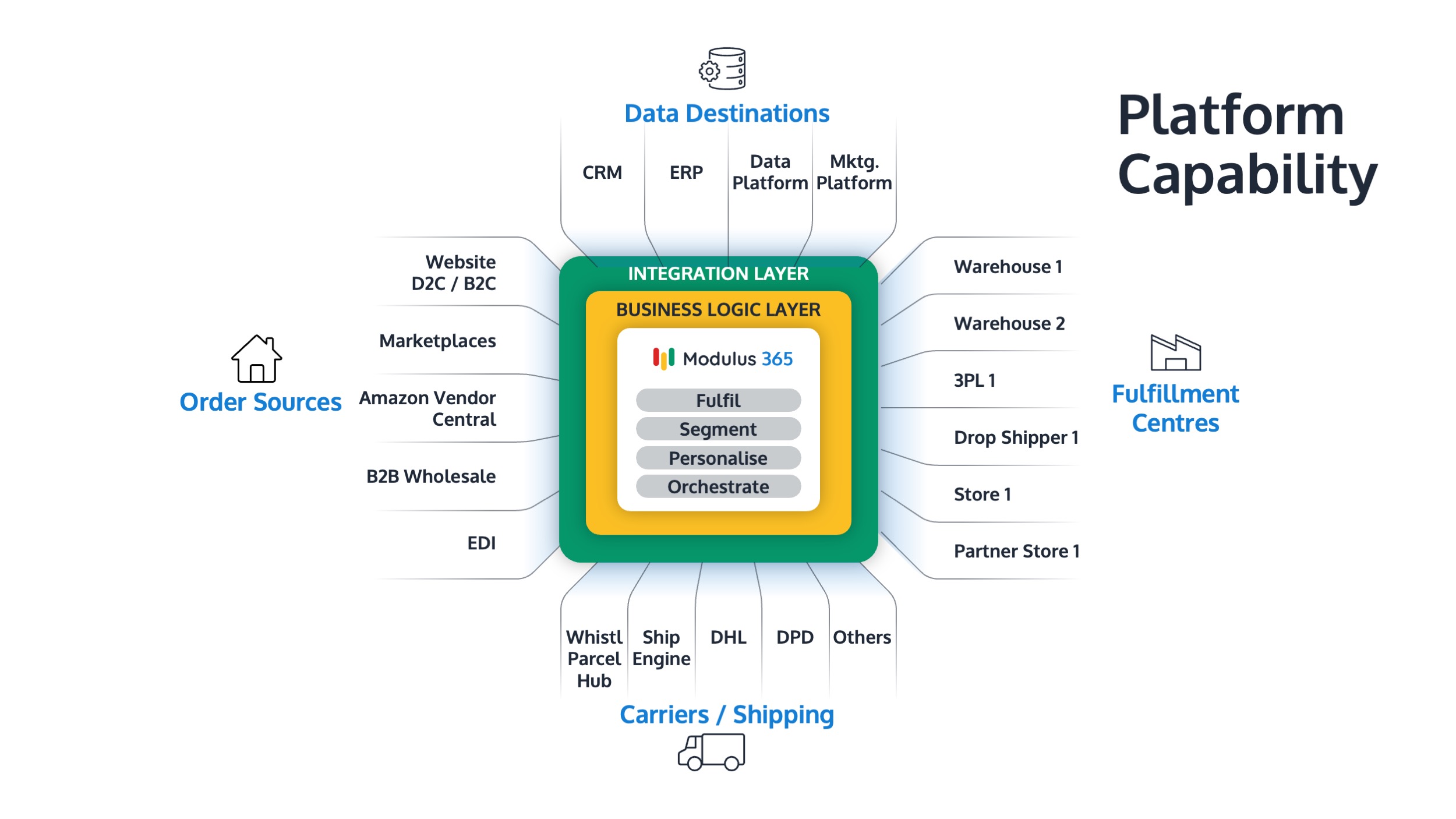


Warehouse Layout Optimisation for Faster Fulfilment
Warehouse layout optimisation is one of the most practical ways to improve fulfilment speed, reduce picking errors, lower labour cost, and increase warehouse capacity without immediately needing more space or more people.
A good warehouse layout helps products move through the operation smoothly — from goods-in, to storage, to picking, packing, dispatch, and returns.
This guide explains how to optimise warehouse layout for faster fulfilment and better operational control.
What is Warehouse Layout Optimisation?
Warehouse layout optimisation is the process of designing or improving the physical layout of a warehouse so goods, people, equipment, and orders move through the operation efficiently.
In simple terms, it answers one question: is the warehouse laid out in a way that helps the team fulfil orders quickly and accurately?
A strong layout supports:
- Faster picking
- Reduced walking time
- Better stock visibility
- Fewer picking errors
- Smoother packing and dispatch
- Improved labour productivity
- Better peak season performance
Warehouse layout is a core part of wider fulfilment operations.
Why Warehouse Layout Matters
Many fulfilment problems are made worse by poor layout.
If fast-moving products are stored far away, similar products are placed together, packing benches are poorly positioned, or goods-in blocks picking routes, the warehouse team loses time every day.
Poor warehouse layout can cause:
- Long walking routes
- Slow picking
- Congestion in aisles
- Stock stored in the wrong place
- Picking and packing errors
- Delayed dispatch
- Higher fulfilment cost per order
- More pressure during peak periods
Improving layout can often deliver operational gains before adding new systems, headcount, or warehouse space.
Start with Product Movement Data
Warehouse layout should be based on how products actually move, not where they happened to be placed historically.
Before changing the layout, review:
- Fast-moving SKUs
- Slow-moving SKUs
- High-value products
- Bulky products
- Fragile products
- Products frequently ordered together
- Products with high return rates
- Peak season products
This helps you decide which products deserve the most accessible locations.
1. Place Fast-Moving Products Close to Packing
Fast-moving products should usually be stored close to the main picking and packing flow.
If your team picks the same products many times each day, every unnecessary step adds labour cost.
For example, moving your top-selling SKUs closer to the packing area can reduce walking time and improve pick speed significantly.
Useful actions include:
- Identify your top 20–50 fastest-moving SKUs
- Move them into easy-access pick faces
- Keep enough stock in the pick face to avoid constant replenishment
- Review fast movers regularly because product demand changes
This is especially important for ecommerce and high-volume fulfilment operations.
2. Separate Fast-Moving and Slow-Moving Stock
Fast-moving and slow-moving products should not always be treated the same.
Fast-moving products need accessible pick locations. Slow-moving products can often be stored further away, higher up, or in less accessible areas.
| Stock Type | Best Location | Reason |
|---|---|---|
| Fast-moving stock | Close to pick and pack flow | Reduces repeated walking time |
| Medium-moving stock | Standard pick locations | Balanced accessibility |
| Slow-moving stock | Less accessible storage | Protects prime locations for higher-volume items |
| Seasonal stock | Flexible temporary locations | Supports peak trading periods |
This approach helps protect your best warehouse space for the stock that matters most operationally.
3. Reduce Warehouse Walking Time
Walking time is one of the biggest hidden costs in warehouse fulfilment.
If pickers spend most of their time walking rather than picking, productivity will suffer.
Ways to reduce walking time include:
- Move fast movers closer to packing
- Group products commonly ordered together
- Use logical pick routes
- Reduce unnecessary aisle crossings
- Keep replenishment stock separate from active pick faces
- Review pick paths regularly
Walking time directly affects fulfilment cost per order, because labour is often one of the biggest fulfilment costs.
4. Design Clear Pick Faces
A pick face is the location where warehouse teams pick products for customer orders.
Good pick faces are easy to identify, easy to access, and stocked at the right level.
Pick faces should be:
- Clearly labelled
- Easy to scan or verify
- Large enough for expected demand
- Separated from bulk reserve stock where appropriate
- Replenished before they run empty
- Reviewed regularly based on demand
If pick faces are too small, teams will constantly stop to replenish. If they are too large, valuable pick space may be wasted.
5. Avoid Storing Similar Products Together
Similar-looking products stored next to each other increase the risk of picking errors.
This is common with:
- Different sizes of the same product
- Different colours in similar packaging
- Single items and multi-packs
- Product variants
- Products with similar SKU codes
Where possible, separate easily confused products or use stronger visual labels and barcode scanning.
Related guide: How to Improve Warehouse Picking Accuracy
6. Keep Goods-In Away from Dispatch Flow
Goods-in and dispatch are both busy operational areas, but they should not block each other.
If inbound stock, pallets, returns, or supplier deliveries interfere with picking and dispatch, the warehouse flow becomes slower and more chaotic.
Good layout should create clear zones for:
- Goods-in
- Quality checks
- Putaway
- Storage
- Picking
- Packing
- Dispatch
- Returns
Each zone should support the next step in the process without creating unnecessary congestion.
7. Position Packing Benches Carefully
Packing benches are a key control point in fulfilment operations.
A poor packing area can slow dispatch even if picking is efficient.
Packing benches should have easy access to:
- Picked orders
- Packaging materials
- Scales
- Printers
- Carrier labels
- Quality check processes
- Completed parcels for dispatch
The packing area should support speed and accuracy, not become a bottleneck.
8. Create a Controlled Returns Area
Returns should not be mixed into goods-in or active pick locations before inspection.
A dedicated returns area helps protect stock accuracy and warehouse flow.
This area should support:
- Return receipt
- Order identification
- Inspection
- Condition grading
- Quarantine
- Restocking
- Disposal or repair
Returns management is an important part of fulfilment operations. Read: Returns Management Best Practices
9. Use Clear Location Labelling
Every storage and pick location should have a clear, unique location reference.
Location labels should be:
- Easy to read
- Consistent
- Logical
- Visible from normal working positions
- Suitable for scanning where possible
Good location labelling improves picking speed, training, replenishment, stock checks, and inventory accuracy.
Related guide: Inventory Accuracy: Why It Breaks and How to Fix It
10. Match Layout to Picking Method
The best layout depends partly on how orders are picked.
Different picking methods place different demands on the warehouse layout.
| Picking Method | Layout Consideration |
|---|---|
| Single order picking | Simple routes and clear locations matter most |
| Batch picking | Needs efficient grouping and strong sorting/packing control |
| Zone picking | Requires clear zone boundaries and handover points |
| Wave picking | Needs planned flow around order priority and carrier cut-offs |
| Tote or trolley picking | Needs aisle width, route discipline, and order separation |
Warehouse layout and picking method should be designed together, not separately.
11. Review Replenishment Flow
Pick faces need to be replenished before they run empty.
If replenishment is reactive, pickers may regularly find empty locations, causing delays, failed picks, and stock confusion.
Good replenishment planning should consider:
- Minimum pick-face quantity
- Replenishment triggers
- Bulk reserve locations
- Replenishment timing
- Peak season demand
- Who owns replenishment tasks
Replenishment should support fulfilment, not interrupt it.
12. Design for Peak Season Flexibility
A warehouse layout that works during normal trading may not work during peak season.
Before peak periods, review whether the layout can support:
- Higher order volumes
- Temporary staff
- More packing benches
- Extra carrier collections
- Temporary fast-moving product locations
- More returns after peak
Related guide: How to Manage Peak Season Fulfilment
Warehouse Layout Optimisation Checklist
| Area | Action |
|---|---|
| Fast movers | Place high-volume SKUs close to packing |
| Slow movers | Move lower-volume SKUs away from prime pick areas |
| Pick faces | Size locations based on demand and replenishment frequency |
| Similar products | Separate products that are easily confused |
| Goods-in | Keep inbound stock from blocking pick and dispatch flow |
| Packing | Position benches near picked orders, packaging, printers, and dispatch |
| Returns | Create a controlled returns area before stock is restocked |
| Labelling | Use clear, logical, scannable location references |
How Technology Supports Warehouse Layout Optimisation
Warehouse layout optimisation is not only a physical design exercise. It also depends on visibility and data.
A WMS or fulfilment platform can help teams understand:
- Which products move fastest
- Where picking errors happen
- Which locations create delays
- Which products are frequently ordered together
- How stock moves through the warehouse
- Where replenishment problems occur
- How picking productivity changes over time
To understand how WMS fits into the wider fulfilment stack, read: OMS vs WMS: What’s the Difference?
How Modulus365 Helps Improve Warehouse Flow
Modulus365 helps businesses connect warehouse workflows, order management, inventory visibility, barcode scanning, carrier integrations, and fulfilment reporting.
By giving teams better visibility of stock, orders, picking activity, and fulfilment performance, Modulus365 supports more efficient warehouse operations and better layout decisions over time.
For Sage businesses, Modulus365 can work alongside the ERP as the fulfilment operations layer.
👉 Learn more about Modulus365 for Sage.
Related FOA Guides
Warehouse layout affects picking speed, walking time, packing flow, stock accuracy, and peak season performance. These related guides will help you improve the wider fulfilment operation:
- How to Reduce Warehouse Walking Time
- Picking Methods Explained: Single, Batch, Zone and Wave Picking
- How to Improve Packing Bench Efficiency
- How to Improve Warehouse Picking Accuracy
- Stock Replenishment Best Practices for Fulfilment Teams
- Inventory Accuracy: Why It Breaks and How to Fix It
- How to Manage Peak Season Fulfilment
- Barcode Scanning in Warehouse Operations
Ready to Improve Warehouse Efficiency?
If your warehouse layout is slowing down picking, packing, dispatch, or stock accuracy, Modulus365 can help bring better visibility and control into your fulfilment operation.
Frequently Asked Questions
What is warehouse layout optimisation?
Warehouse layout optimisation is the process of improving the physical layout of a warehouse so products, people, equipment, and orders move more efficiently through fulfilment operations.
How does warehouse layout affect fulfilment speed?
Warehouse layout affects fulfilment speed by influencing walking time, pick routes, packing flow, stock visibility, replenishment, and dispatch efficiency.
How can I reduce walking time in a warehouse?
You can reduce walking time by placing fast-moving products closer to packing, grouping commonly ordered products, improving pick routes, and separating slow-moving stock from prime pick locations.
Where should fast-moving products be stored?
Fast-moving products should usually be stored in accessible pick locations close to the main picking and packing flow to reduce repeated travel time.
How often should warehouse layout be reviewed?
Warehouse layout should be reviewed regularly, especially when order volumes grow, product demand changes, new channels are added, or peak season planning begins.