

How to Reduce Warehouse Walking Time
Warehouse walking time is one of the biggest hidden costs in fulfilment operations. In many warehouses, pickers spend more time walking between locations than actually picking products.
Reducing walking time can improve productivity, lower fulfilment cost per order, increase dispatch capacity, and reduce pressure on warehouse teams during busy periods.
This guide explains how to reduce warehouse walking time through better layout, stock placement, picking methods, replenishment, and warehouse workflow design.
What is Warehouse Walking Time?
Warehouse walking time is the amount of time warehouse staff spend travelling between locations during picking, putaway, replenishment, stock checks, packing, dispatch, or returns processing.
In fulfilment operations, walking time is often most visible during picking. If pickers repeatedly travel long distances to collect products, productivity falls and cost per order increases.
Walking time is closely linked to warehouse layout optimisation, picking method, stock location strategy, and order profile.
Why Warehouse Walking Time Matters
Walking time may not appear as a line item in your reports, but it directly affects labour efficiency.
High walking time can cause:
- Lower orders picked per hour
- Higher fulfilment cost per order
- Slower dispatch
- More warehouse congestion
- Greater picker fatigue
- Poor peak season performance
- More pressure on temporary labour
If your warehouse feels busy but output is not increasing, walking time may be one of the main reasons.
How Walking Time Affects Fulfilment Cost
Labour is often one of the largest costs in fulfilment. If warehouse staff spend too much time walking, every order becomes more expensive to fulfil.
For example, if a picker spends 60% of their shift walking and only 40% picking, the warehouse may appear fully staffed but still lack productive capacity.
Reducing unnecessary walking is one of the most practical ways to reduce fulfilment cost per order.
Common Causes of Excessive Walking Time
Walking time usually increases because of layout, stock placement, poor replenishment, or inefficient picking methods.
- Fast-moving products stored too far from packing
- Popular products spread across the warehouse
- Pick routes that cross back and forth unnecessarily
- Slow-moving stock taking up prime pick locations
- Pick faces running empty and forcing staff to search for stock
- Similar products placed in confusing locations
- Goods-in, returns, and dispatch areas interfering with pick routes
- Paper-based picking without route optimisation
The goal is to make the most common warehouse journeys shorter, simpler, and more predictable.
1. Identify Fast-Moving Products
The first step is to understand which products are picked most often.
Review product movement data, order history, and pick frequency to identify:
- Top-selling SKUs
- Products picked many times per day
- Products frequently ordered together
- Seasonal fast movers
- High-volume marketplace or ecommerce products
Fast-moving products should usually be given the most accessible pick locations.
2. Move Fast Movers Closer to Packing
Fast-moving products should normally be placed close to the main pick and pack flow.
If the same SKU is picked 100 times per day, even a few extra metres per pick can create significant wasted time.
Useful actions include:
- Move top SKUs into prime pick locations
- Place high-volume items close to packing benches
- Keep fast-moving products at comfortable picking height
- Review fast-mover locations regularly
- Use temporary fast-pick areas during peak periods
This simple change can often improve productivity quickly.
3. Group Products Commonly Ordered Together
If certain products are frequently ordered together, storing them near each other can reduce walking time.
This is especially useful for:
- Bundles
- Product kits
- Accessories
- Common multi-line ecommerce orders
- Frequently paired wholesale items
Grouping related products can shorten pick routes and reduce repeated movement across the warehouse.
4. Review Your Picking Method
Your picking method has a major impact on walking time.
Single order picking is simple, but it can involve repeated trips to the same locations. Batch picking, trolley picking, zone picking, or wave picking may reduce travel depending on your order profile.
For example:
- Batch picking reduces repeated visits to the same locations
- Trolley picking allows multiple orders to be picked in one route
- Zone picking keeps pickers working in defined areas
- Wave picking helps release work in controlled groups
Read the full guide: Picking Methods Explained: Single, Batch, Zone and Wave Picking
5. Create Logical Pick Routes
Pick routes should reduce unnecessary backtracking and aisle crossing.
A good pick route should guide the picker through the warehouse in a logical sequence, rather than forcing them to move backwards and forwards between locations.
Review whether your current routes:
- Follow a natural warehouse path
- Minimise aisle changes
- Reduce congestion
- End near packing where possible
- Avoid repeated travel to the same areas
Digital picking workflows can help sequence tasks more efficiently than paper-based lists.
6. Remove Slow Movers from Prime Pick Locations
Prime pick locations should be reserved for products that justify the space.
If slow-moving products occupy easy-access locations, pickers may have to travel further for high-volume items.
Review your pick face regularly and move slow-moving products to less prominent locations where appropriate.
| Product Type | Suggested Location |
|---|---|
| Fast movers | Closest to main pick and pack flow |
| Medium movers | Standard pick locations |
| Slow movers | Further away or less accessible locations |
| Seasonal products | Temporary high-access locations during demand periods |
7. Improve Pick Face Replenishment
Walking time increases when pickers arrive at a location and find insufficient stock.
They may then search nearby, ask colleagues, walk to bulk storage, or trigger manual checks.
To prevent this, create clear replenishment rules:
- Define minimum pick-face quantities
- Replenish before locations run empty
- Monitor fast-moving products daily
- Keep reserve stock clearly located
- Use replenishment tasks rather than informal stock movement
Good replenishment keeps pickers picking instead of searching.
8. Reduce Congestion in Busy Areas
Congestion increases walking time because staff slow down, wait, divert, or work around obstacles.
Common congestion points include:
- Goods-in areas
- Packing benches
- Dispatch lanes
- Returns areas
- Fast-moving pick faces
- Narrow aisles
Review whether people, pallets, trolleys, cages, and packed parcels are blocking natural movement through the warehouse.
9. Keep Goods-In and Returns Away from Active Pick Flow
Goods-in and returns can easily disrupt picking if they are not controlled.
Inbound pallets, unchecked stock, returned goods, or quarantine items should not block active pick locations or main movement routes.
Good warehouse zoning should separate:
- Goods-in
- Quality check
- Putaway
- Returns inspection
- Active picking
- Packing
- Dispatch
This supports smoother warehouse movement and protects stock accuracy.
10. Use Barcode Scanning and Digital Pick Lists
Paper pick lists can increase walking time if they are not sequenced efficiently.
Digital pick lists can help guide pickers through locations in a better route order. Barcode scanning also reduces the time lost to checking, correcting, and investigating errors.
Technology can support:
- Location-based pick sequencing
- Product validation
- Tote or trolley picking
- Batch picking
- Real-time pick progress
- Exception reporting
Digital workflows help reduce both walking time and picking errors.
11. Measure Pick Productivity
You cannot improve walking time properly without measuring the impact.
Useful measures include:
- Orders picked per hour
- Lines picked per hour
- Units picked per hour
- Average pick route time
- Distance walked per order where available
- Picking accuracy
- Failed picks
These should be tracked alongside wider fulfilment KPIs.
12. Review Walking Time Before Peak Season
Walking time becomes more painful during peak periods because every inefficiency is multiplied by higher order volume.
Before peak season, review:
- Fast-mover locations
- Temporary pick faces
- Pick route logic
- Batch or wave picking options
- Packing bench capacity
- Replenishment flow
- Temporary labour training
For more peak planning guidance, read: How to Manage Peak Season Fulfilment
Warehouse Walking Time Reduction Checklist
| Area | Action |
|---|---|
| Fast movers | Move high-volume SKUs closer to packing |
| Product grouping | Place commonly ordered products near each other |
| Pick routes | Reduce backtracking and unnecessary aisle crossings |
| Picking method | Review batch, trolley, zone, or wave picking |
| Slow movers | Move low-volume products away from prime locations |
| Replenishment | Keep pick faces stocked before they run empty |
| Congestion | Keep goods-in, returns, and dispatch areas controlled |
| Technology | Use digital pick lists and barcode scanning where possible |
How Technology Helps Reduce Walking Time
A WMS or fulfilment platform can help reduce walking time by improving task sequencing, stock visibility, picking methods, and warehouse workflow control.
Useful capabilities include:
- Digital pick lists
- Route sequencing
- Batch picking
- Wave picking
- Trolley picking
- Barcode scanning
- Location validation
- Replenishment task control
- Pick performance reporting
To understand how warehouse systems fit into the wider fulfilment technology stack, read: OMS vs WMS: What’s the Difference?
How Modulus365 Helps Improve Warehouse Productivity
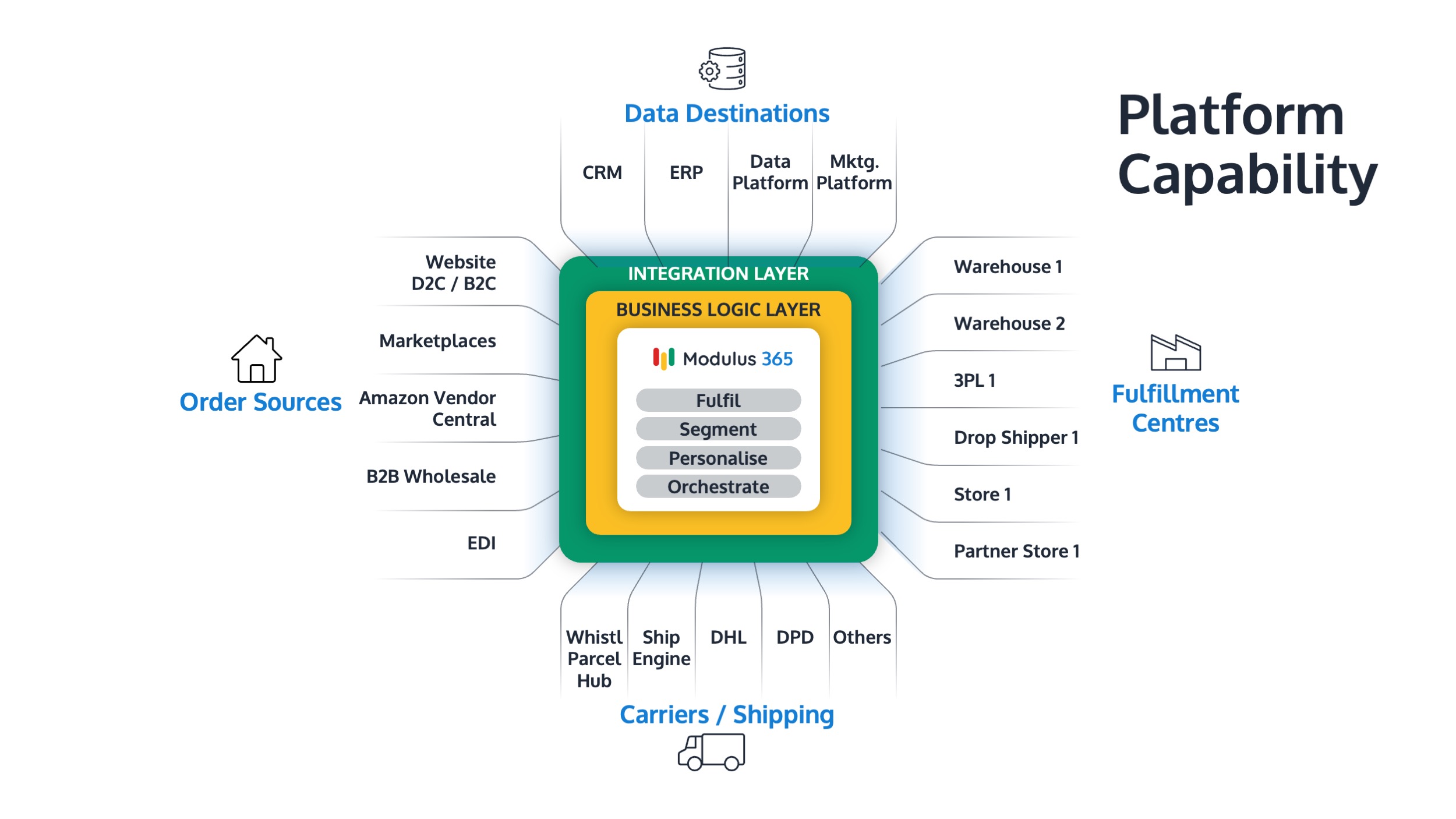
Modulus365 helps businesses connect order management, warehouse workflows, barcode scanning, inventory visibility, carrier integrations, and fulfilment reporting.
By giving teams better control of picking, stock movement, and fulfilment workflows, Modulus365 helps reduce unnecessary manual effort and improve warehouse productivity.
For Sage businesses, Modulus365 can work alongside the ERP as the fulfilment operations layer.
👉 Learn more about Modulus365 for Sage.
Related FOA Guides
Walking time is closely linked to warehouse layout, picking method, replenishment, packing flow, and fulfilment cost. These guides will help you reduce wasted movement across the operation:
- Warehouse Layout Optimisation for Faster Fulfilment
- Picking Methods Explained: Single, Batch, Zone and Wave Picking
- Stock Replenishment Best Practices for Fulfilment Teams
- How to Improve Packing Bench Efficiency
- How to Improve Warehouse Picking Accuracy
- How to Reduce Fulfilment Cost Per Order
- Fulfilment KPIs Every Operations Leader Should Track
- How to Manage Peak Season Fulfilment
Ready to Improve Warehouse Productivity?
If walking time, slow picking, or warehouse congestion are increasing your fulfilment costs, Modulus365 can help bring better visibility and control into your warehouse workflows.
Frequently Asked Questions
What is warehouse walking time?
Warehouse walking time is the time warehouse staff spend travelling between locations during picking, putaway, replenishment, stock checks, packing, or dispatch activity.
How can you reduce walking time in a warehouse?
You can reduce walking time by moving fast-moving products closer to packing, improving pick routes, using better picking methods, grouping commonly ordered products, and using digital pick lists.
Why is walking time a problem in warehouses?
Walking time is a problem because it reduces productivity, increases labour cost, slows dispatch, increases fatigue, and raises fulfilment cost per order.
Which picking method reduces walking time?
Batch picking, trolley picking, zone picking, and wave picking can all reduce walking time depending on the warehouse layout and order profile.
Does warehouse layout affect walking time?
Yes. Warehouse layout has a major impact on walking time because it determines how far staff travel between stock locations, packing benches, replenishment areas, and dispatch zones.